NBC Sports’ Bob Costas Talks Yankees, Dodgers, NCAA Chaos & More with Rich
Bob Costas wanted to get one thing on the record before baseball, and it was not about baseball.
The Browns-to-LSU story, he said, is a blip. It is a symptom.
"This isn't just corrupt or chaotic, it's both of those things," Costas told Rich. "It's now at a point where it's perverse."
His argument starts with what NIL was originally understood to mean. If a student happens to have musical talent and the local orchestra wants to pay them, why should a scholarship athlete be barred from that? Why should a star quarterback in College Station not make a hundred grand from a local car dealer?
That is the thing everyone agreed to. Not universities directly paying players to attend.
Costas listed the reforms that should have happened instead. A stipend across the board, identical for a bench player and a star. And the provisions Dale Brown was talking about at LSU years and years ago, like a coach being allowed to reach into his own pocket to fly a player home for a grandmother's funeral.
What bothers him most in the decade-long argument is the standard line that everyone is getting rich except the exploited athletes, because of what it quietly asserts.
"That says implicitly that the education is worth nothing."
He walked it out. A student-athlete may be sitting next to a classmate whose parents worked multiple jobs to put their children through school, saving hundreds of thousands of dollars if a scholarship arrives, in a world where the degree measurably changes lifetime earnings. And under current conditions, Costas doubts many of these athletes are attending class at all. If you play at four or five universities, do the credits even transfer, assuming there are credits?
He also thinks the public reaction has been aimed at the wrong target. Plenty of people, in his read, are fine with the corruption and simply object to the chaos, which is why the congressional initiatives he has seen are essentially about capping and smoothing rather than asking the underlying question.
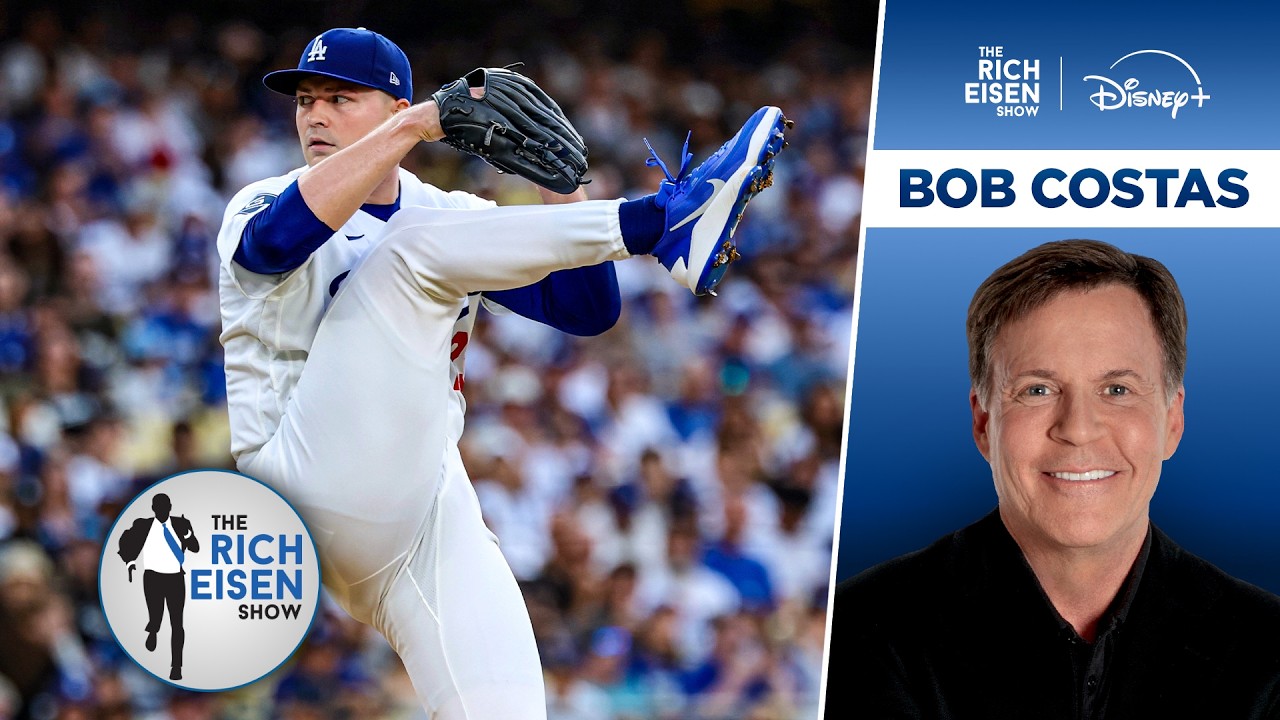
Then Rich took him to the trade they were discussing last time, which was Tarik Skubal landing with the Dodgers.
Costas' interest was not in the Dodgers. It was in Milwaukee.
He understands the Brewers made what they believed was a strong offer, and his question is why they did not go further. The math he laid out is postseason-shaped. Milwaukee is likely to meet Los Angeles in October. In a division series, with the extra off days built in for television, you could throw Jacob Misiorowski and Skubal at the Dodgers in four of five games. In a seven-game series, potentially four starts, maybe five if they combined in a Game 7.
Regular seasons are not the point here, and Costas knows the counterargument about organizational models. The Brewers, Rays and Guardians operate differently than the Yankees and Dodgers for real reasons.
But he thinks there are moments when you say you are going outside the model.
"We haven't been to the World Series since 1982, and we've never won the World Series," he said, voicing the franchise. "What would it mean to our brand and to our fan base?"
The Dodgers, meanwhile, were playing a different game. Costas credits them with intelligent and effective use of overwhelming resources, and thinks part of the Skubal calculus was less about acquiring him than about keeping him away from Milwaukee.
That is the long game. Last year they slow-walked to 93 wins and it may happen again, but everything points at October and a rotation where half a dozen pitchers would be the ace or the number two anywhere else. If Edwin Diaz does not come around, one of those starters becomes the closer.
On the National League MVP, Costas separated two ideas that voters have historically kept apart.
"Obviously Ohtani is the greater player, no disrespect to PCA," he said. But most valuable has never meant player of the year.
Pete Crow-Armstrong likely has many great seasons ahead, and this is his best one, with the impact spread across his bat, his center field defense and his baserunning. Shohei Ohtani, meanwhile, no longer runs the way he once did for obvious and cautious reasons, and remains a unicorn who contributes on the mound.
Costas' read of the electorate is that Ohtani will be first or second every healthy year of his career, that this is Crow-Armstrong's career year, and that his value to the Cubs may be marginally greater in this one season.
"If we have an excuse to vote for someone other than Ohtani, this year we have a good excuse."
He also offered a structural fix for the playoffs. Divisional opponents should not meet in the wild card round. Spending 162 games sprinting past a team and then playing them in a best-of-three roll of the dice does not make much sense.
In the American League, he pointed at the Yankees, who are where they are largely without Aaron Judge, with Max Fried and Carlos Rodón only now returning and Cody Bellinger back and homering. If Judge returns and the lineup is whole, the pitching depth makes them a real World Series threat.
Giancarlo Stanton, Rich noted, has run out of calves to strain, having now gone through both.
Costas called that a shame, because whatever Stanton misses in the regular season, he has all-time postseason numbers.
Which brought them to the thing underneath all of it.
No team in the bottom half of MLB payrolls has won a World Series since Kansas City in 2015. The Dodgers paid more in luxury tax last year than 16 teams paid in total payroll.
But Costas' most effective argument was comparative, and he ran it like a list. The Penguins have won a Stanley Cup in the last decade. Are they in the Pirates' economic circumstance? The Lightning have won one. Are they the Rays? The Panthers have won one. Are they the Marlins? The Chiefs have won three Super Bowls in a decade. Are they the Royals?
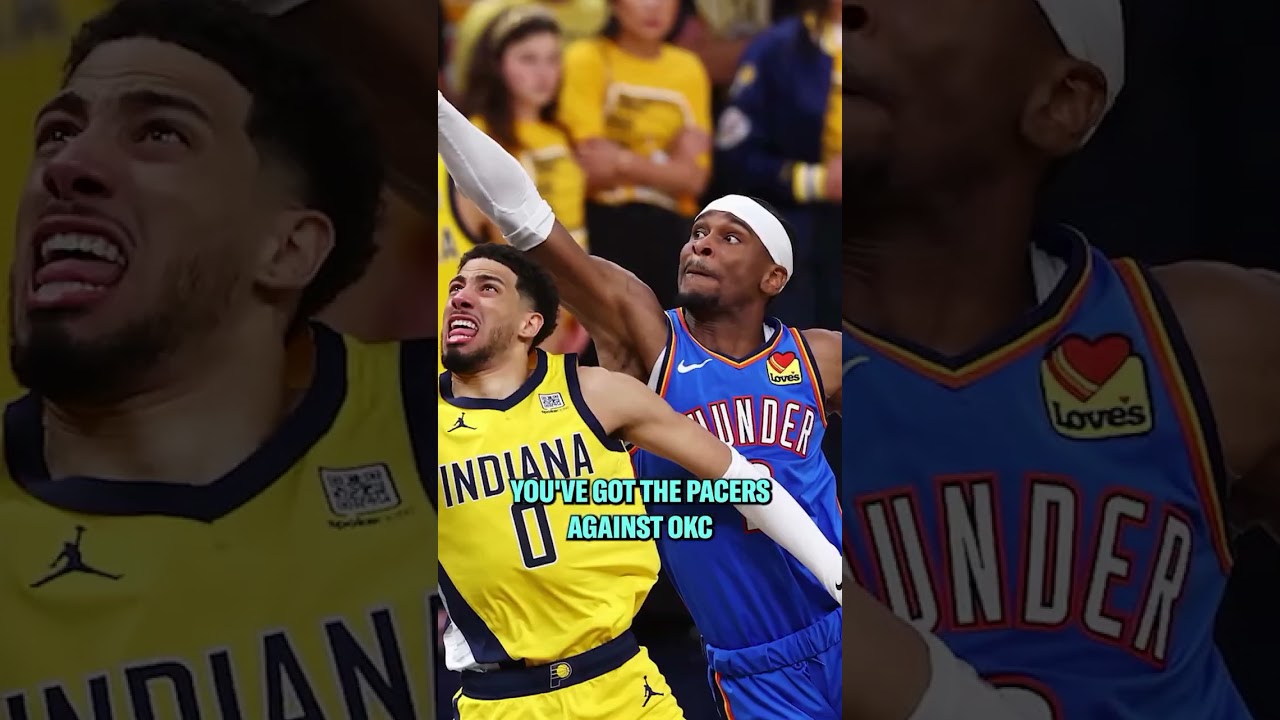
The NHL has a hard cap. The NBA's requires several doctorates to parse but exists, and Costas pointed at the last two Finals: Pacers against Oklahoma City, Spurs against the Knicks. Take the Knicks out, and three of those four teams are not merely small markets by baseball standards. They are markets too small to have a baseball team at all.
The NFL solved it differently, back in Pete Rozelle's day, by sharing television revenue equally, which is why Green Bay is not Milwaukee.
Rich raised the obvious history: Marvin Miller, Donald Fehr, and owners who do not tend to arrive with reasoned proposals so much as throw the problem at the players.
Costas' expectation is that the owners will go around the union leadership and appeal directly to the rank and file. A cap on team payrolls rather than individual salaries, paired with a payroll floor. Shared local media revenue, which matters enormously now that the regional sports networks have collapsed, hurting everyone except the Dodgers, Yankees, Red Sox and Mets. Free agency after five years instead of six. A higher minimum. Improved pensions.
He offered one revealing data point. Five years ago the union's eight-member executive council, disproportionately very high-salary players, voted unanimously to reject the owners' proposal. The player representatives voted 26 to 4 across the 30 teams to accept it.
"We're going to make this better for 90 percent of you," he said, framing the pitch. "Half of you are consigned to teams that don't have a really good chance to compete anyway."
His closing point was the one he clearly cared about most, and it was a definition.
The players were right on principle going back to Miller, and the owners were duplicitous and got caught colluding in the 1980s. None of that requires treating a salary cap as unspeakable.
"A league is a business in which the competitors must simultaneously be partners," Costas said. The Dodgers cannot play an intrasquad game and draw the same ratings. Half the league is responsible for every competition.
A diner and a five-star restaurant can operate on entirely different principles on the same street and both succeed. That does not work in a league. Nobody ever objected to Mike Tyson's purse or a golf winner's check, because those are individual calculations of what someone was worth stepping into the ring.
Players should be handsomely compensated, and they are. But the league itself has to function, and that requires devices that serve the customers.
Watch the full interview with Bob Costas on The Rich Eisen Show, streaming live on Disney+ weekdays Noon-3PM ET.
Adapted from the original segment on The Rich Eisen Show. How we cover the show.