ESPN’s Tim Legler Talks Knicks-Cavs, and Spurs-Thunder with Rich
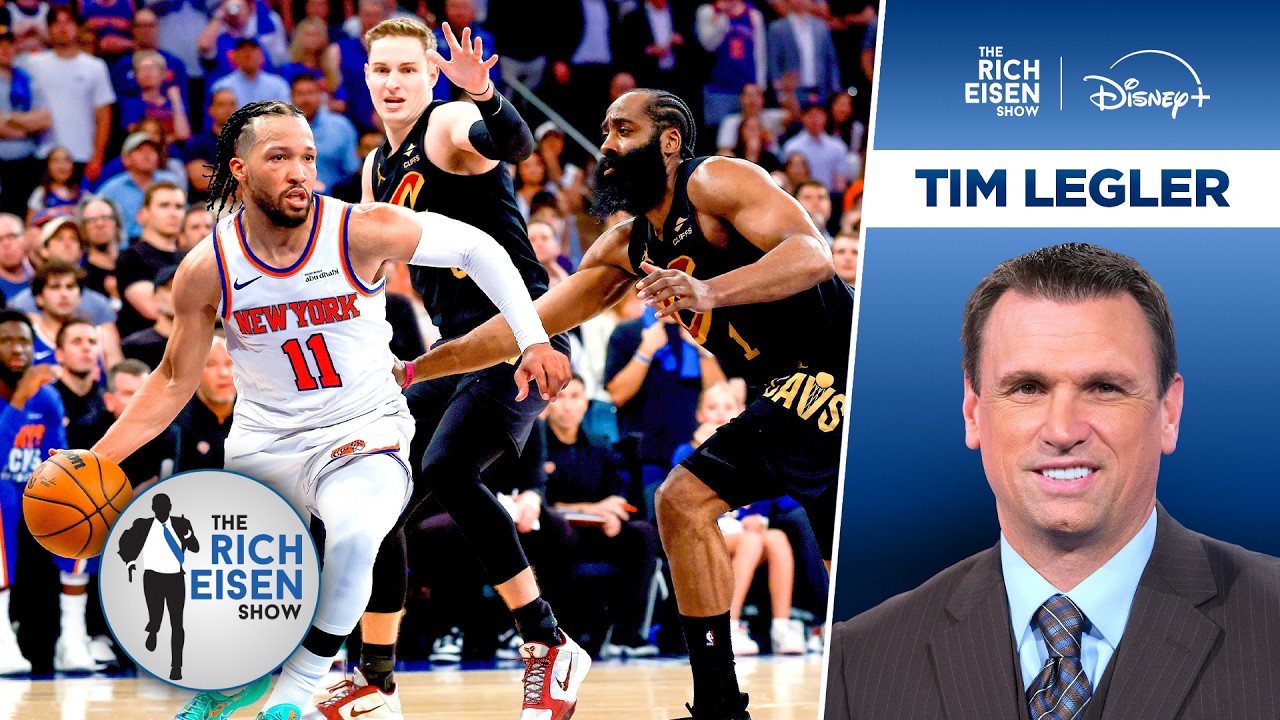
Tim Legler called Game 1 of the Eastern Conference Finals at Madison Square Garden the night before. He showed up on the Rich Eisen Show still processing what he had watched. His read on the 44-11 Knicks run was equal parts coaching analysis and an indictment.
Start with what unlocked the comeback. The Knicks have spent the last few weeks running a redesigned offense, anchored by Karl-Anthony Towns as a hybrid playmaker at the elbows and Jalen Brunson moving off-ball. It works. For a seven-game stretch, Legler said, it was historically efficient.
The Cavs prepared for that offense. They were on point with switches, communications, the off-ball cuts. The Knicks were missing open threes. Legler called it rust.
Then, with about eight minutes left in the fourth quarter, Mike Brown reached for a different lever.
"That offense that we've been praising so much kind of went to the side," Legler said. "Let's go back to the early Brunson days as a Nick where we just go high ball screen or ISO, let him get the match up he wants, and let him go to work."
Brunson cut the deficit in half by himself in three minutes. The shots were the kind no analyst could have predicted in a sequence: a runner down the left side off the wrong foot, a bank shot down the right side that hit the top white stripe of the backboard, a floater left, a pull-up right, a step-back three. The Garden, which had been quiet, exploded.
The Cavaliers responded with half-hearted double teams, and that is where Legler put the loss.
"When you do a half-hearted double team, the other three guys don't know exactly if you're fully committed," Legler said. The result was open Knicks shooters. Mikal Bridges hit a big three. Landry Shamet hit a big three. OG Anunoby got drives.
Rich asked the blunt question. Did Mike Brown outcoach Kenny Atkinson?
Legler ducked the framing slightly, then answered it.
"Kenny Atkinson had a rough night from a coaching standpoint," Legler said. The metaphor he constructed was about a control board. Brown had one button to push, and it said number 11 on it. Atkinson's board was covered in tape.
He elaborated, drawing the most Tim Legler analogy possible.
"It wasn't like Eddie Murphy on SNL, too hot for the hot tub," Legler said. "Actually the hot tub felt very nice. Jalen Brunson jumped into that hot tub and he swam around. By the time they tried to turn up the heat or shut the hot tub off, it was a full-fledged pool party."
On Harden specifically, Legler refused to blame him.
"He's a guard in his upper 30s. He was never really known in this league as a committed defender. He can play defense in certain matchups. He's much better against bigger, stronger guys. But if you're asking him to play a guard that's shifty, that can change directions in the middle of the floor by himself, at no point in his career was that going to be a recipe for success."
The fault, Legler said, lay with the Cavs for letting that matchup happen as often as it did, not with Harden for being asked to play it.
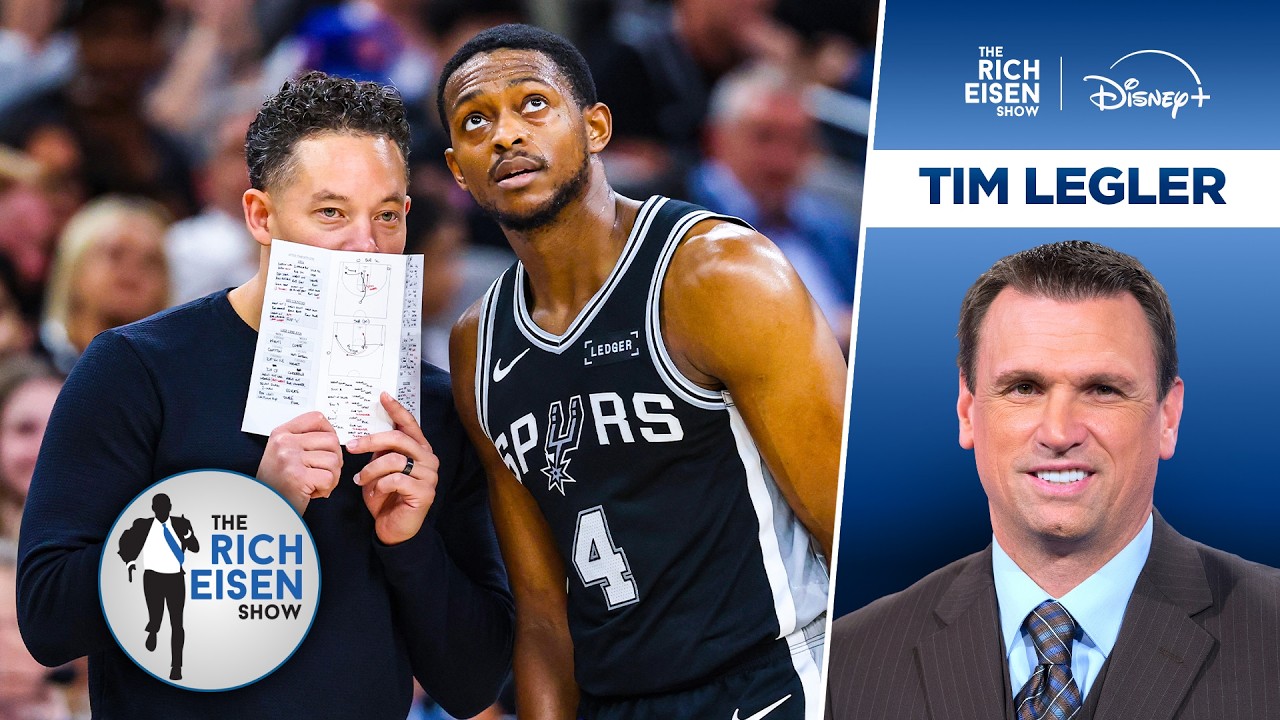
The second half of the conversation moved to the Western Conference Finals and the question of how the Thunder slow down Victor Wembanyama. Legler did not have a clean answer.
He instead made the case for what makes Wembanyama different. The film is one thing. The interviews are another. From the day Wembanyama entered the league, Legler said, he refused to dodge responsibility. He talked openly about wanting to be one of the greatest to ever play, about wanting MVPs, about carrying teammates. Most 20-year-olds cannot say that out loud. Wembanyama did.
"This guy is wired in a way that leads to all-time greatness if he can stay healthy," Legler said.
Rich invoked the Jordan comparison. Legler did not directly cosign it but did not push back either. He pointed instead to the Spurs' built-in advantage in surrounding Wembanyama with the right voices. Unlike most small-market organizations, San Antonio has kept its legends in the building. Tim Duncan attends games next to David Robinson. Sean Elliott works for the organization. Manu Ginóbili is constantly around.
"You don't think those guys also have been in the ear of Victor Wembanyama from the beginning?" Legler said. "When you feel like you're coming into an organization that's going to protect you, it's a security blanket."
Legler also flagged Dillon Harper as the next franchise piece. The 19-year-old guard, in Legler's read, has power Legler has not seen in a one-and-done guard, and the same desire for the moment that drives Wembanyama. Stephon Castle, the rookie of the year, has that gene too.
Legler's tactical case for the Thunder Game 2 response was specific. SGA and Jalen Williams shot 37% on 48 combined attempts in Game 1 of a series Oklahoma City still nearly won in double overtime. Both will be better. The bigger ask, Legler said, is Chet Holmgren.
"You cannot just accept this," Legler said. "I think the way he does it is by looking for his perimeter shot more. Three-point shot will be there for him as much as he wants. Maybe he has to take ten of those. Maybe he hits four in the first half."
The closer was Sam Merrill's potential game-winning three that rimmed out. Legler watched it spin sideways inside the rim.
"For a pure shooter, it had the slightest sideways rotation," Legler said. "When the seams are rotating directly backwards to you as a shooter, that ball's going in. That's the difference between a win and a loss last night."
Mike Breen, Legler noted, had his "BANG" loaded for a Cavaliers win. He never had to use it.
Watch the full interview with Tim Legler, Richard Jefferson on The Rich Eisen Show, streaming live on Disney+ weekdays Noon-3PM ET.
Adapted from the original segment on The Rich Eisen Show. How we cover the show.