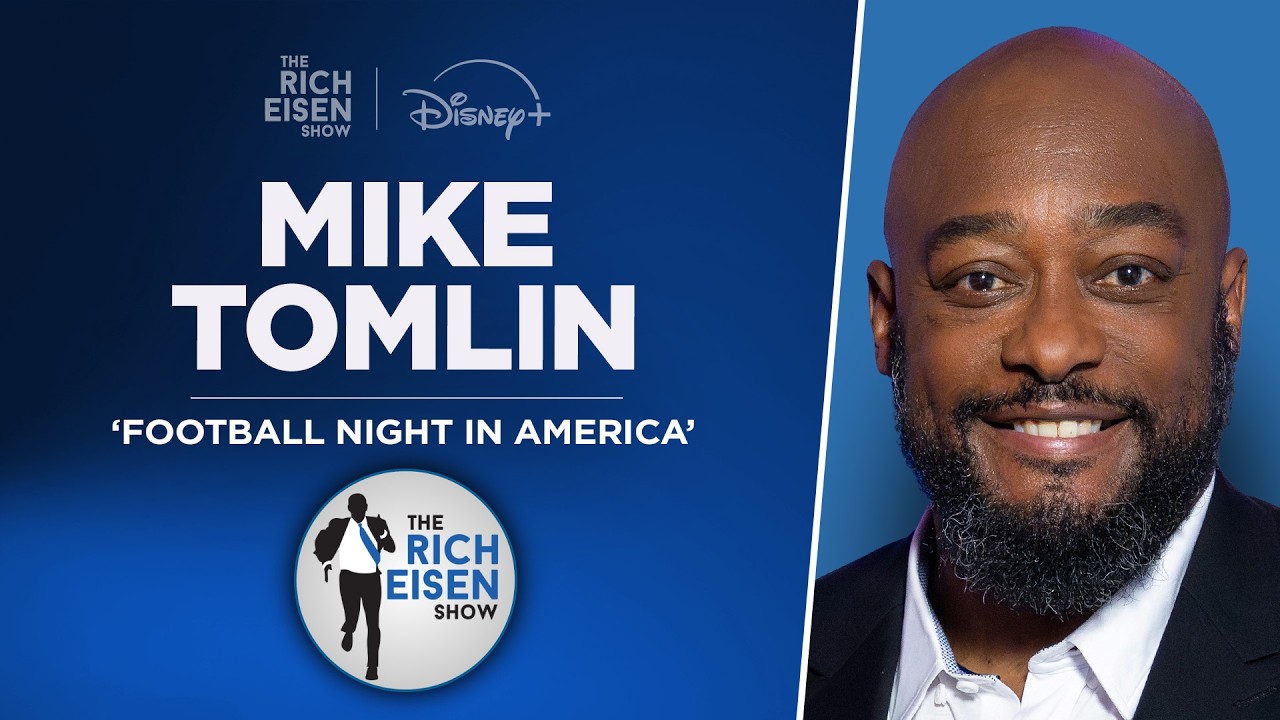
NBC's Mike Tomlin Talks Life After Coaching, Steelers' Super Bowl Hopes & More
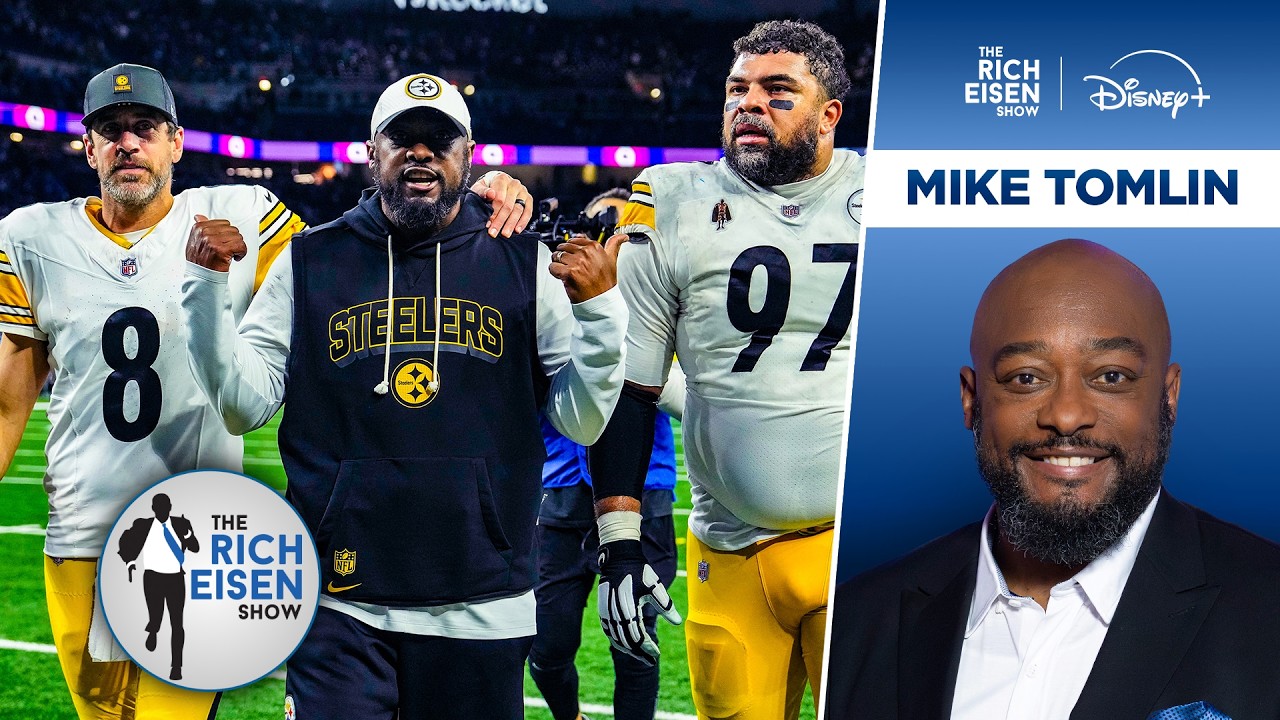
Rich introduced Mike Tomlin as a new member of the paparazzi, which is a funny way to describe a man who spent two decades on the other side of the microphone treating that group as weather. Tomlin did not fight the label. He has fully wrapped his arms around it, and the reason is simpler than anyone expected.
"August was beautiful. I never had an August in my adult life."
That is the whole answer, really. Tomlin got a summer, and he took all of it. What he does not miss is specific and telling. "It's a good thing sometimes to not sleep with your phone on the nightstand." What he will miss is equally specific. The competitive component. The relationship component. "Being able to help young men develop individually and collectively. I think it's a passion of mine."
Rich noted he looked relaxed, and possibly rested. Tomlin confirmed it with a line he attributed to an unnamed source. "I hear I'm a little bit more fun to be around these days." Asked who was telling him that, he did not budge. "The streets tell me."
The real question about a coach moving to a desk is whether he can criticize the people who do the job he just left. Tomlin's answer was that this is not a new skill, it is the old one. "I think that's an element of coaching, is critiquing and correcting and truth-telling." His framework carries over directly. "When you're not making things up, when you're being direct and honest, it gives people an opportunity to absorb criticism."
He is under no illusions that the football will be clean. "Certainly there're going to be things to criticize. That's football." The discipline is in the delivery. Tell the truth, "while at the same time being sensitive to the fact that it's not always easily digestible."
Rich then handed him a live case study, playing a clip of Aaron Rodgers discussing an interception in practice and a repeat mistake by Roman Wilson. Rodgers had called it a good learning moment, noted Wilson had made the same error earlier in camp, praised his camp overall and said he had utmost confidence in him.
Tomlin read it like game film. "It's a teachable moment." He identified the two-layer structure immediately. Rodgers is acknowledging a young developing player while also teaching him the actual standard, which is that new mistakes are evidence of progress and repeated ones are not. "As long as you're having new issues, then progress is being made. Repeat errors, there's a price to pay for that."
Then he named the mechanic, and it is the best line of the interview. "He's rapping him on the beak while at the same time putting his arm around him." Tomlin called that a component of leadership and of Rodgers' leadership style specifically, and said Rodgers uses media opportunities to do both jobs at once. Because Rodgers builds individual relationships, Tomlin expects it landed with Wilson in the right spirit.
On the Steelers, Tomlin declined to perform neutrality. "I'm a Steeler fan, man. I'm not even going to pretend that I'm not." He had a hand in selecting many of those players, and when you care and have relationships, "it's okay to root."
He has, however, deliberately kept his distance, and the reason is self-knowledge. "I'm a fixer by nature." He is no longer a component of what happens there, so he limits how much he reads and follows. "I try to protect my sanity by limiting my exposure to what's transpired in their developmental journey."
Rich pushed anyway. Can they make the Super Bowl?
"I certainly do." His reasoning ran through the quarterback. "I think that's the only reason Aaron comes back. He believes it. I believe it. I don't think he comes back if he doesn't believe that." Tomlin sees the bones of a good unit in all three phases, and thinks the relative silence around them is usable. Not being talked about the way other teams are "can be a good motivator and a catalyst." His conclusion was flat and unhedged. "I think they got high expectations, and I think they should have high expectations."
Because Tomlin's first Sunday Night Football assignment is the Cowboys and the Giants, Rich asked the George Pickens question directly. Why did Pickens end up leaving Pittsburgh, and why has Dallas not committed long term either?
Tomlin gave the general principle first, and it is the least sentimental description of roster building you will hear. You draft talented young players, you help them develop, "if they're developing in the right ways, if they fit your long-range plans, then you do second contract business with them." Then the specific. "It didn't happen for us with George."
What he said next reframed the story, because it is not only a Pittsburgh story. "There's also been something that's stopped Dallas from making that long-term commitment to him as well." So Pickens still has something to prove, which Tomlin does not think troubles him at all. "Knowing him, that doesn't bother him. He just loves to play football."
Pressed on what exactly needs proving, Tomlin was careful to speak only for his own building. It was never the playing. "It's not only play, it's his development in other areas, intangible areas." His standard for a high-dollar second contract is that it comes with leadership responsibility attached, and there he was blunt. "I just don't feel like that was in his natural wheelhouse. We felt better about DK's abilities in those areas."
Then he pivoted straight to the endorsement, because both things are true at once. "Get your cameras ready, man, for week one, because that's what GP does. He makes plays."
The last football question was the one everyone is circling. What do you tell a team walking into a building that holds Aaron Donald and Myles Garrett?
Tomlin's answer was eight words long before it was anything else. "Reputation and resumes don't win football games. Play does."
He then made the case with a recent example rather than a platitude. "Twelve months ago I think the Philadelphia Eagles seemed like a super team as well." What actually separates teams, in his experience, is the part nobody can put on a spreadsheet. "The intangible things oftentimes determine who gets out of the stadium with the win or a loss. You can't measure it, but you know it exists."
So the plan against a super team is to win the part that is not on paper. Selflessness. Playmaking from a variety of places. "That's how you combat super players and super teams." He gave the Rams their due in the same breath. They "have the ingredients to be that."
Rich closed by asking whether this is a page turned or a sabbatical. Tomlin would not choose. "I don't know about the long-term component of things. I've just lived enough to know that you leave certain doors ajar." Then he gave the only metric that is currently reporting. "But man, I got to admit, my pulse rate is pretty low these days."
When Rich suggested the calm might have something to do with nobody live streaming his meetings anymore, Tomlin allowed himself the understatement of the segment. "There's some variables to that job I left."
Watch the full interview on The Rich Eisen Show, streaming live on Disney+ weekdays Noon-3PM ET.
Adapted from the original segment on The Rich Eisen Show. How we cover the show.