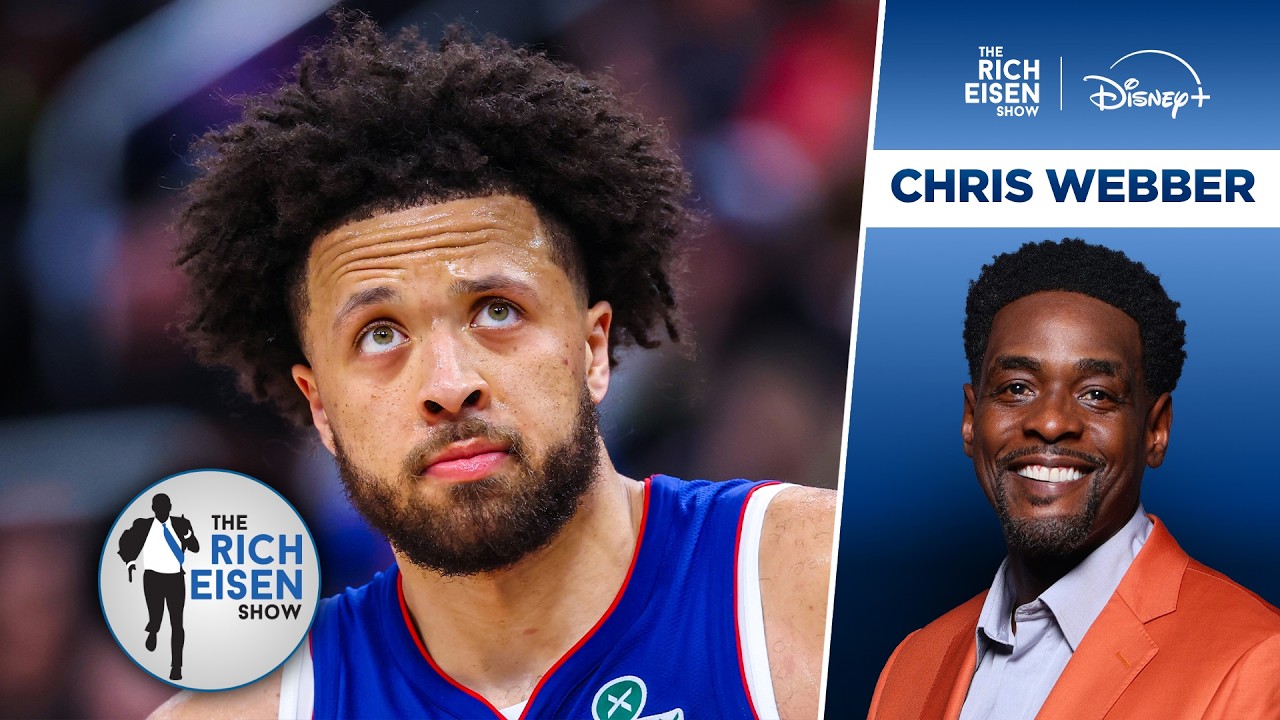
Chis Webber: Why the #1-Seeded Pistons are Down 2-3 to the Cavaliers
Chris Webber told a friend two games into the Detroit-Cleveland series that he thought the Pistons would end up exactly here. Down 2-3. Going home for Game 6 needing to extend a series they once led.
He came on the show to walk through how a 2-0 lead with the No. 1 seed turned into an elimination game.
The first thing Webber wanted on the table was the bench coaching.
"It's a difference between offensive minded philosophies and defensive minded philosophies," Webber said. "If you get a tie game, maybe you want an offensive philosophy. I think Big Steve has done a great job out of the last nine minutes of that game."
What Webber misses from his playing days, in tight games, is a coach who calls plays that get a star one or two easy looks.
"I as a player remember having to have coaches to get me one or two easy ones," Webber said. "Call a play so I can get an easy layup. Call a play to get us involved and move, and not just depend on the flow of one player."
The bigger structural issue Webber identified was Cleveland's small-ball pivot.
"Cleveland went to a smaller lineup," Webber said. "When Cleveland went to that smaller lineup, your big has to be able to score at a clip to really make the other team fearful and want to change strategies. And if you're not getting that scoring from that position, then that defender, that bigger guy, is a mismatch on the floor defensively for the little guy that he should have been going at."
Rich asked the obvious follow-up. Can Cleveland actually finish it?
Webber went to a famous Houston-Golden State game he called as an analyst for the answer.
"I remember watching Houston shoot threes, and I think they missed 13, 17 threes in a row, something that was just incredible," Webber said. "I remember thinking that whole game, if the philosophy was just to get one layup, or if you had a player that wasn't able to shoot threes, could he get in there, get a foul, and a layup?"
His read on Cleveland is that they can finish it if they honor every possession.
"If Cleveland with their shot selection is very selective and honors each possession, the way that they're playing, the energy, guys off the bench, you know, from Schroder to others, a lot of guys aren't getting enough credit in their team," Webber said. "I don't see how, if I'm a Cleveland fan, I don't see how we can't win. We got to win one out of two. They should win."
Rich pointed to Donovan Mitchell averaging 30 points a game as a tilt.
"That does not lead to transition buckets for the Pistons, cuz it's going through the hoop," Rich said.
Webber confirmed the value and pushed back on the lingering critique that James Harden is a poor man's anyone.
"People wanted to talk all year about how he and Harden are a liability, or he's a poor man's Harden," Webber said. "But when you have guards that constantly put pressure, cuz one thing let's get straight, you cannot check one player in the NBA. There's not one player you can check, period. It's, can you make them uncomfortable? Can you get them off their spacing?"
The hardest matchup to handle, in Webber's framing, is a great scorer who is not selfish.
"The easiest guy to check is a selfish guy," Webber said. "But when he and Harden get the ball in their hands and they start going into their bag of one-on-one moves, if you're waiting in the corner, if you're waiting at top with your hands ready, you might get a wide open shot because they attract so much defense."
Webber will not count Detroit out at home. The pattern, though, looks familiar.
"We saw them get down to Orlando like this because Orlando was scoring, and then they got away from their offensive principle," Webber said. "So I can't count my team out Detroit, but defensively, Cleveland should feel, not like they've accomplished anything, but that they're on the verge of getting it done."
Watch the full interview with Donovan Mitchell, Chris Webber on The Rich Eisen Show, streaming live on Disney+ weekdays Noon-3PM ET.
Adapted from the original segment on The Rich Eisen Show. How we cover the show.