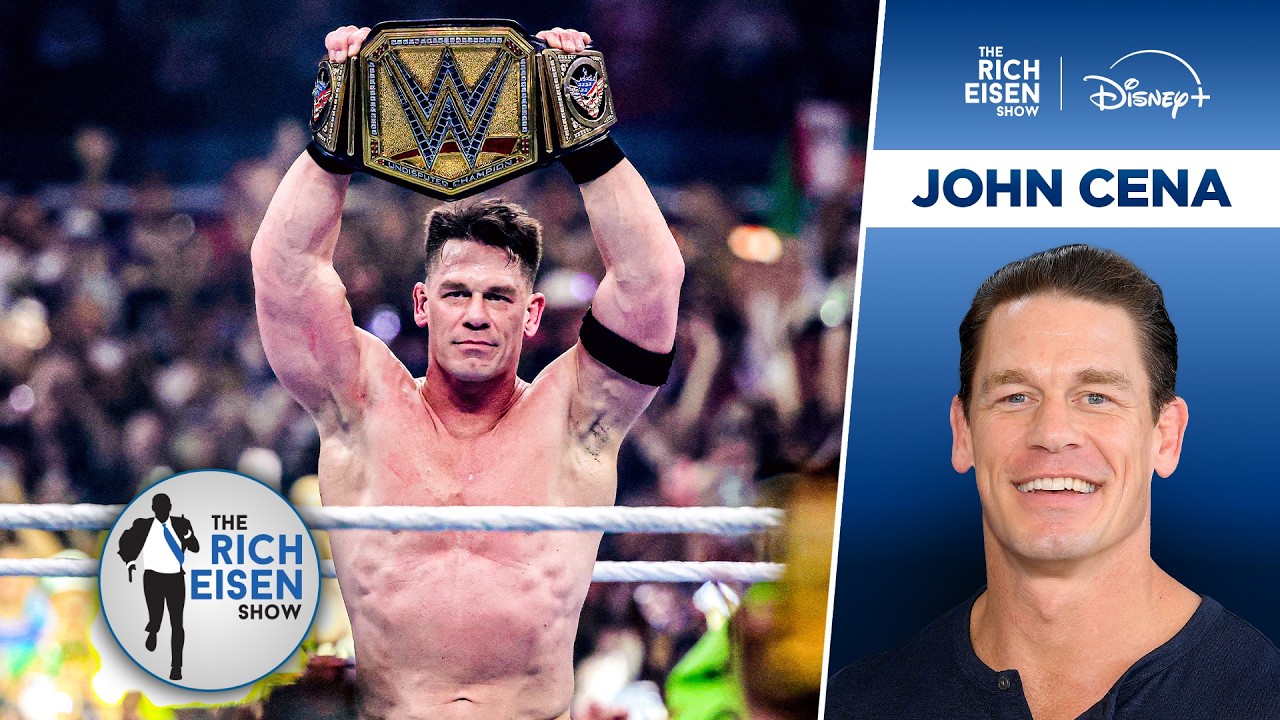
WWE Legend John Cena on His Heel Turn & Upcoming ‘John Cena Classic’
John Cena's return to the Rich Eisen Show came with two threads. The first was his late-career heel turn, which divided his fanbase. The second was the new wrestling event he is producing as WWE brand ambassador. Both, he said, were calculated bets on involving the audience differently.
Rich, a longtime Cena fan, did not mince words about the heel turn.
"I didn't like it, John," Rich said. "I don't like it at all."
Cena nodded. He pointed out that the decision was a creative challenge he had spent years dreading and finally embraced. The choice was to do the turn in the most realistic way available. He kept his uniform. He kept his music. He looked for a believable reason a man with his history would choose what he called "a non-virtuous path." The frustration with his own polarizing fan reaction, accumulated over more than two decades of polarization, was the lever he used.
"The audience got a taste of it and they're like, no, we want the you back," Cena said.
Rich asked the question Cena's answer had teed up.
"Did you want the you back?"
Cena said he has always taken creative risks. He has rarely turned down a creative pitch in WWE. He took the same approach on the final moment of his career, the in-ring tap-out that closed his 23-to-24-year journey. The reaction to that, like the reaction to the heel turn, was mixed.
"There's no right way to please everyone when you're truly closing away the closing of a 23, 24-year journey," Cena said. "Our fans have invited me into their living room 52 weeks a year plus ancillary premium live events for 23, 24 years. The best you can do is do all you can."
He described the moment immediately after the final bell as one of clarity. He heard the crowd one last time. He understood he could not give another ounce.
"What a way to close that chapter," he said.
The forward-looking piece of the interview was the John Cena Classic, an event Cena said he personally pitched and is producing. He explained the origin. The previous Saturday Night's Main Event closed with Cena against Gunther. The opening of that night, Cena instead chose to use as a showcase. Instead of running a 90-minute tribute reel of his own career, he wanted to highlight marquee returning stars and pair them against the future of the business. Sol Ruca, Je'Von Evans, and Oba Femi all made their grand-stage debuts on that night, in slots they would not have gotten without Cena's redirection.
"I chose to use the rest of the evening as showcasing marquee superstars as a way to get crowds in the building and keep them excited," Cena said. "The talent felt like they were part of something new, and that was really important."
That experience, Cena said, generated the larger idea behind the Classic. The tournament will include a fan vote. The twist is the part Cena said he expected to generate the most discussion.
"If you're a talent and you go out and actually tear the house down, but you're this close to winning and maybe you came up short," Cena said, "you still have the opportunity to be in the running to see if you won the fan vote enough to be crowned champion."
A non-winning performer, in other words, can still be crowned the Classic's champion if the audience says so.
The bet Cena is making, in his own framing, is the same one he made with the heel turn and the final tap-out. Involve the fans more directly. Take a calculated creative risk. Accept that the response will be mixed.
"You're not going to please everyone," Cena said. "Our fans are very vocal and very involved."
He has 23 years of polarization to know that part is true.
Watch the full interview with Gunther, John Cena on The Rich Eisen Show, streaming live on Disney+ weekdays Noon-3PM ET.
Adapted from the original segment on The Rich Eisen Show. How we cover the show.


