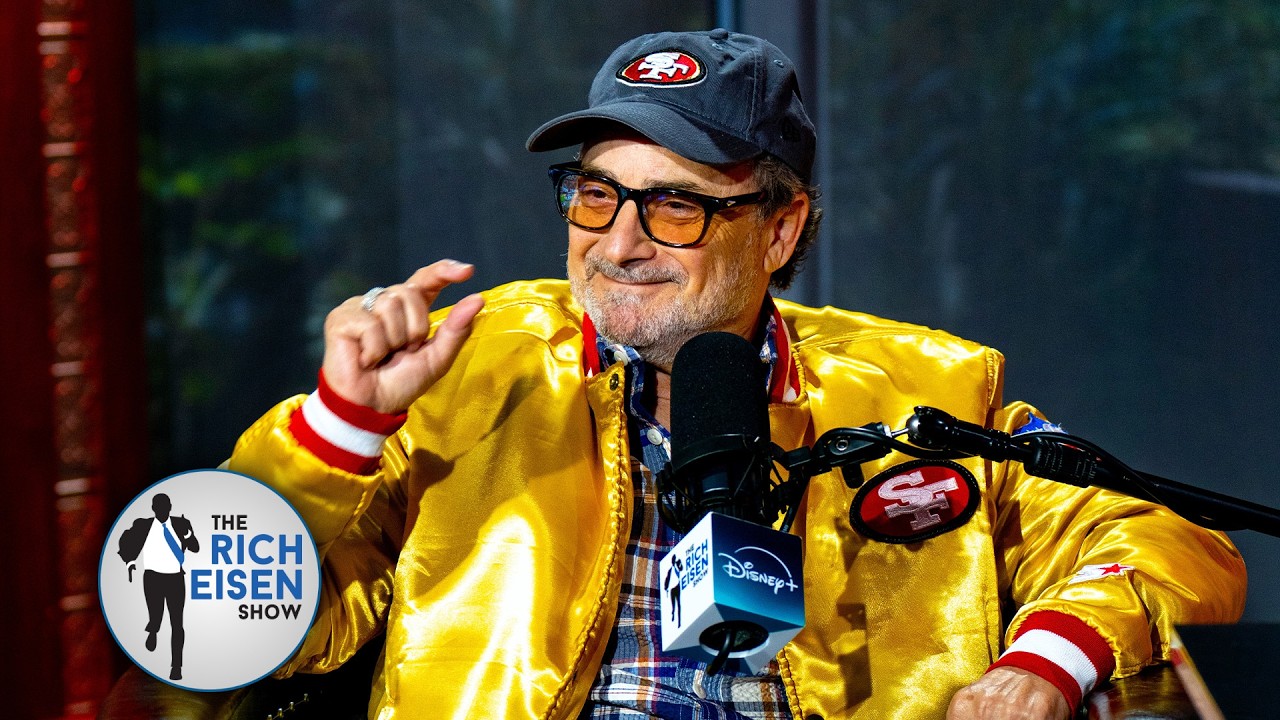
Why James McAvoy Feared ‘Last King of Scotland’ Could be His Last Film
Two young Scottish rappers walk into an audition at a major international record label and get laughed out of the room. Not because the music is bad, but because they rap in their own accents.
That's the true story behind California Schemin', the feature directorial debut of James McAvoy, who also acts in the film. McAvoy laid out the premise for Rich, and it's as wild as it sounds.
"They get likened to being the rapping Proclaimers," McAvoy said, before adding, "By the way, I'm here for a movie about the rapping Proclaimers if anybody's got a good script."
The kids are devastated, he said, essentially told they can't do what they want to do because of where they come from and the way they sound. So they take the note. They reinvent themselves as fake California skateboard dudes, return to the same label with the same track, and get a record deal. The plan is to release a single, get on MTV or a chat show, and come clean, exposing the label's prejudice against regional accents. The question the film asks is whether they can actually go through with it.
There's a second meaning in the title that McAvoy doesn't spell out on screen. The boys come from what Americans would call a project and what Scots call a council scheme. "That's why it's called California Schemin'," he said. "I'm from a scheme."
That's what pulled him in. Movies about neighborhoods like the one he grew up in are usually "sincere, earnest, depressing, exploitative of the poverty kind of situation," McAvoy said. This one embraces those realities, but it also feels like what his childhood was actually like when he walked out the front door. "It was full of adventure and opportunity and peril and flight and the opposite sex and like bad things and good things and fun and all the stuff that actually movies are about."
It also mirrored his own career: artists from the lower end of the socioeconomic ladder trying to bust into show business, a tightrope McAvoy said he has walked for 31 years. "So whilst it was a true story about real guys, it also felt incredibly personal to me."
Rich, who has plenty to ask about from Band of Brothers to Shameless, went first to The Last King of Scotland, which earned McAvoy a BAFTA nomination and won Forest Whitaker the Oscar. Did McAvoy know at the time it could put him on the map?
"I was so scared to think like that when I was 23," he said.
His goal as a young actor was simple: pay the bills and keep a roof over his head by performing. Anything beyond that felt like luck that could run out at any moment. "I might get found out. They might any point say, 'Now you're done. Your time's over. Oh, we get it. We found you out.'"
But McAvoy said that fear never inhibited him. If anything, it freed him. "I've got nothing to lose, cuz this could be over at any minute, so I'll give it my best shot at every opportunity," he said. He knew the favor of show business can be fickle, that great actors sometimes go missing for decades and never come back.
What he was really aware of on that set was Whitaker, in Uganda, giving the performance of a lifetime as Idi Amin. McAvoy described a character with horrors and atrocities, good things done for the country, humor, physical intimidation, and a human being in there too. He didn't know whether Whitaker was a method actor, but something of him stayed connected to the character away from the camera, and he invited McAvoy into it.
"But then ultimately when the cameras roll, it becomes very simple," McAvoy said. "That was like part of my education in film."
Then Rich noticed something. Throughout his answers, McAvoy kept touching his temple with his fingertips. "You're doing the Professor X thing," Rich told him.
"I've got nothing. I'm just getting blank messages," McAvoy joked.
When he was first offered the young Charles Xavier, McAvoy was a fan of the cartoon and the original film, and a Patrick Stewart fan from his Star Trek days. But the real driver was practical. His first kid had just been born, he'd stayed off work for a while, and while they owned their house, they didn't have much money in the bank. This was a three-movie deal shooting about 30 minutes from his front door in London.
"I was like, 'I don't even need to read the script. I'm doing this,'" McAvoy said. When his agent asked what he thought of it, he called it "a work of heartbreaking genius," having barely flicked through it.
He didn't work with Stewart as Charles until the second movie, when the older and younger casts finally crossed over. Only Hugh and McAvoy overlapped, so McAvoy's first day was the older cast's last day, and they shared a scene. For someone who grew up watching Stewart captain the Enterprise and bring "this classical sort of authority" to Star Trek, the fanboy in him was rejoicing.
The best part of the story came before the scene. McAvoy's part of the film was set in the '70s, and to distinguish his Charles from Stewart's bald one, he sat through a 17 or 18 hour hair extension session. About 10 hours in, he took a break, walked around the corner, and found Ian McKellen in a big trailer, inviting him in while Stewart cooked salmon.
Then McKellen pointed out that Stewart had done a bit of Macbeth, McKellen had done Macbeth, and McAvoy had just finished Macbeth in the West End two weeks earlier. Why don't they all do a bit?
"And they start doing Macbeth at each other," McAvoy said. "And I've only just come off stage two weeks ago, playing the lead character, Macbeth. I cannot remember a word." He excused himself to go finish his hair extensions.
Both men were knights of the realm by then, McAvoy said, but nobody was asking anyone to call them Sir Patrick or Sir Ian. He and Stewart still get on really well, though they haven't seen each other in a long time.
As for more X-Men? "There's always possibilities. I'm not involved in any way," McAvoy said. He did 10 good years in that world, and while some actors happily stay in the same gig for decades, the joy of his career has been never falling into one thing. "It's why I'm directing now. I want to challenge myself in that field as well."
Asked what he's proud of that people don't talk about enough, McAvoy first mentioned his theater work, which he sometimes mourns because it's never recorded. On film, his answer was Filth, another very Scottish movie from Trainspotting creator Irvine Welsh and director Jon S. Baird. "It's really dark and it's really funny and it's like tragic and it's grotesque, but it's also heartfelt," he said. "That's the one I'd say would benefit from more exposure."
There was one last topic: McAvoy married into an Eagles family. He lives in North London near the Tottenham stadium, calls himself a "plastic Tottenham fan" whose kids are Tottenham fans proper, and is a Celtic fan himself. The family had talked about coming over from Philly to catch the Eagles in London, where they just got done in the final minute by the Jaguars.
"Kind of glad we didn't," he said.
Watch the full interview with James McAvoy on The Rich Eisen Show, streaming live on Disney+ weekdays Noon-3PM ET.
Adapted from the original segment on The Rich Eisen Show. How we cover the show.