The Athletic’s Stewart Mandel Talks CFB Landscape & ‘26 Preview
The conferences are done waiting for the NCAA, and Stewart Mandel thinks that is the actual story of this week.
The Athletic's college football editor in chief laid out why the Big Ten and SEC moving on their own matters beyond the specific rule. If the NCAA cannot enforce anything, even something as apparently common sense as barring players who have been in NFL camps, because judge after judge strikes it down, then conferences start doing it themselves.
The legal reasoning is narrower than it looks. There is wide opinion that a conference can impose more stringent rules precisely because it is not a total ban. If a player cannot suit up in the SEC, he still has options elsewhere, which is a very different proposition than the NCAA saying you cannot play anywhere.
The escalation happened fast. The Big Ten went first, specific to the NFL. The SEC added the NBA and WNBA. The Big 12 topped both, extending it to any sport and anyone who has signed a professional contract.
As for whether this ends up back in court, Mandel pointed at the calendar instead.
Teams playing this weekend lock rosters by Friday. LSU plays the following weekend, so theirs locks a week later. As long as there are motions and appeals, the clock may simply run out on the season.
Could a MAC or Sun Belt school open its doors instead? Possibly. The Louisiana injunction is still in effect, and those players remain eligible. They just cannot play in the three conferences that closed the door.
Asked what the actual concern is, Mandel was precise. Playing minor league baseball while playing college football, as Russell Wilson did, is a different thing entirely and remains permitted. The worry is a football player who went to the NFL, went through camp, played preseason games, and had months of access to the best coaching and training available, then lining up against 18-year-olds.
On the theory that only total chaos produces real change, Mandel's response was that we are already there. At one point this summer a player was set to suit up for Texas Tech after being caught gambling on his own team.
"If the case to Congress is help, we're screwed, right? I think we're there."
His skepticism about Congress is structural rather than cynical. Bills keep approaching a vote and then someone blocks it over a state interest or a pet issue. Mandel has always thought waiting on Congress is unrealistic, and believes schools will eventually have to negotiate with the players in some form of collective bargaining, which is exactly the outcome they have been avoiding.
The host floated a wilder theory: that winning now requires less NIL money or facilities than a sympathetic local judge.
Mandel granted more of it than expected. Trinidad Chambliss could win the Heisman at Ole Miss and might be the best quarterback in the country, and he was not supposed to be eligible. He found a judge in Mississippi sympathetic to a medical issue from Division II four years earlier. Most of these cases involve peripheral players. This one involves a star.
"The next frontier is going to be you don't like a call in the game, take that to court."
On whether do-it-ourselves eventually means a breakaway, Mandel noted the SEC has been loudest about self-governance while insisting there is no breakaway talk. He thinks the field decides it. SEC and Big Ten schools are already operating in a different financial and competitive tier than most of the ACC and Big 12, Miami's breakthrough notwithstanding. If the playoff expands and stays dominated by two conferences, the question of why they need the others answers itself.
His Belichick forecast was the bluntest thing in the interview.
"Oof. Not good."
The reasons stack up. Belichick's son, the defensive coordinator, is on medical leave. General manager Michael Lombardi is under investigation. And in an era of teams getting older by loading up on experienced portal players, North Carolina went young, and will open Saturday with the second least experienced roster in the country.
The schedule is also harder than the 4-8 season, now including Miami and Notre Dame.
"I don't see it being better than 4-8," Mandel said, "but I'm always happy to be proven wrong."
On whether Curt Cignetti has created a new hiring template, Mandel called him a unicorn and possibly one of the all-time greats. What Indiana proved, though, is the wisdom of hiring people who have won consistently at every stop, regardless of level. He pointed to UCLA hiring Bob Chesney, who followed Cignetti at James Madison and took them to the playoff after winning at Division III, Division II and FCS.
That track record, to Mandel, says more than a hot coordinator or a Group of Five coach with two good years.
Indiana opens ranked sixth, which Mandel fully expects Cignetti to weaponize, having learned while reporting a big story on him this spring that finding a snub is the man's core competency. Sixth is the best preseason ranking in school history, and they finished last season number one and perfect, sitting behind two Big Ten teams they beat, including Oregon twice.
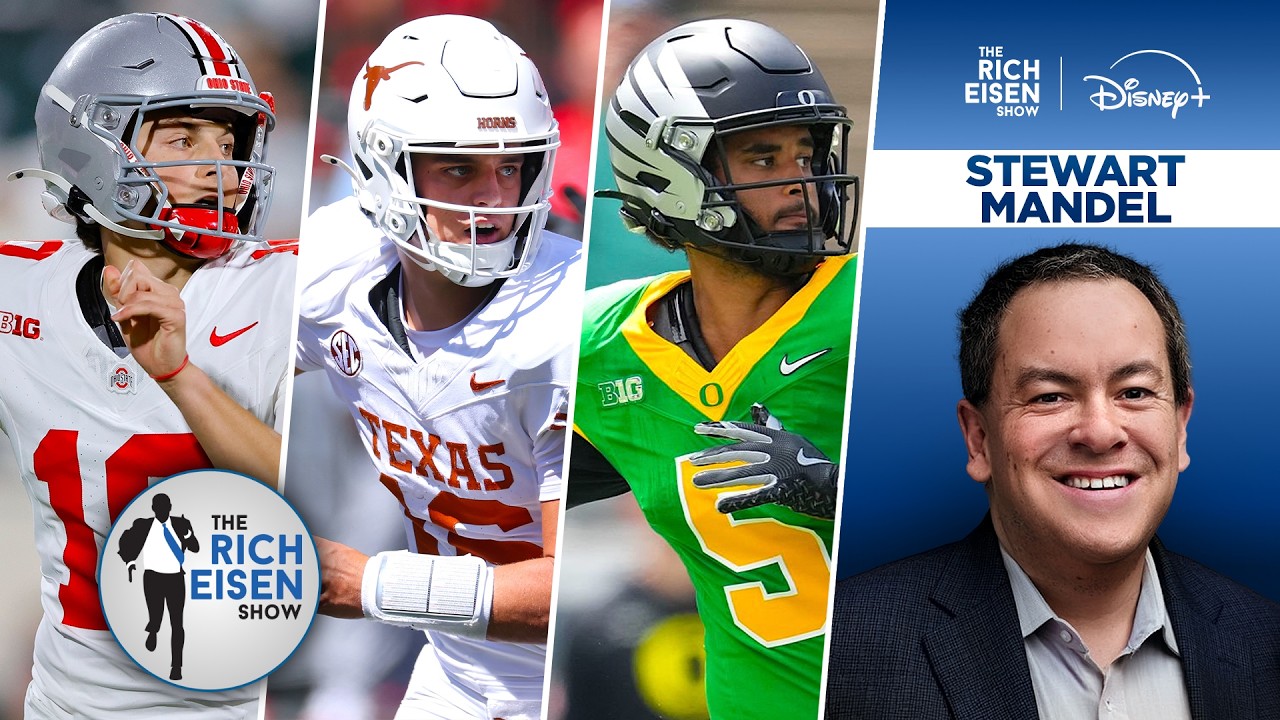
Ceilings and floors, quickly. Ohio State's ceiling is a national title and they have won double-digit games every year since 2012, but with trips to Texas, USC and Indiana plus Oregon at home, 9-3 is a real floor. It might still make the playoff.
Oregon he considers unfairly maligned. The reputation comes from two playoff blowouts, but they have won plenty of big games and have the talent to win it all. His concern is losing both coordinators, Tosh Lupoi to Cal and Will Stein to Kentucky, and whether Dan Lanning can simply plug in replacements.
Notre Dame benefits from a rule change: finish in the top 12 and you are in, which means last year's snub would not have happened.
Asked for something bad about Texas, and only something bad, Mandel obliged. Their All-American left tackle hurt his knee and will likely miss Ohio State. A linebacker who played a lot got kicked off the team. And there are whisperings, unusual in a preseason where every program claims to be bigger, stronger and faster than ever, that Arch Manning has not looked great.
On NIL rules arriving anytime soon, the answer was immediate.
"Absolutely not."
The House settlement was supposed to solve it with equal revenue share and a clearinghouse. What it actually did was set a new floor. Two years ago Ohio State's $20 million roster was the scandal. Now $20 million leaves you in rough shape, and top-end rosters are closer to $50 million.
Short of a miracle intervention, expect another year of those numbers going up.
The interview closed on helmets, where Mandel and the desk converged on Michigan over Notre Dame, on the grounds that you could carry those two to Japan and only one of them gets identified instantly.
Watch the full interview with Stewart Mandel on The Rich Eisen Show, streaming live on Disney+ weekdays Noon-3PM ET.
Adapted from the original segment on The Rich Eisen Show. How we cover the show.