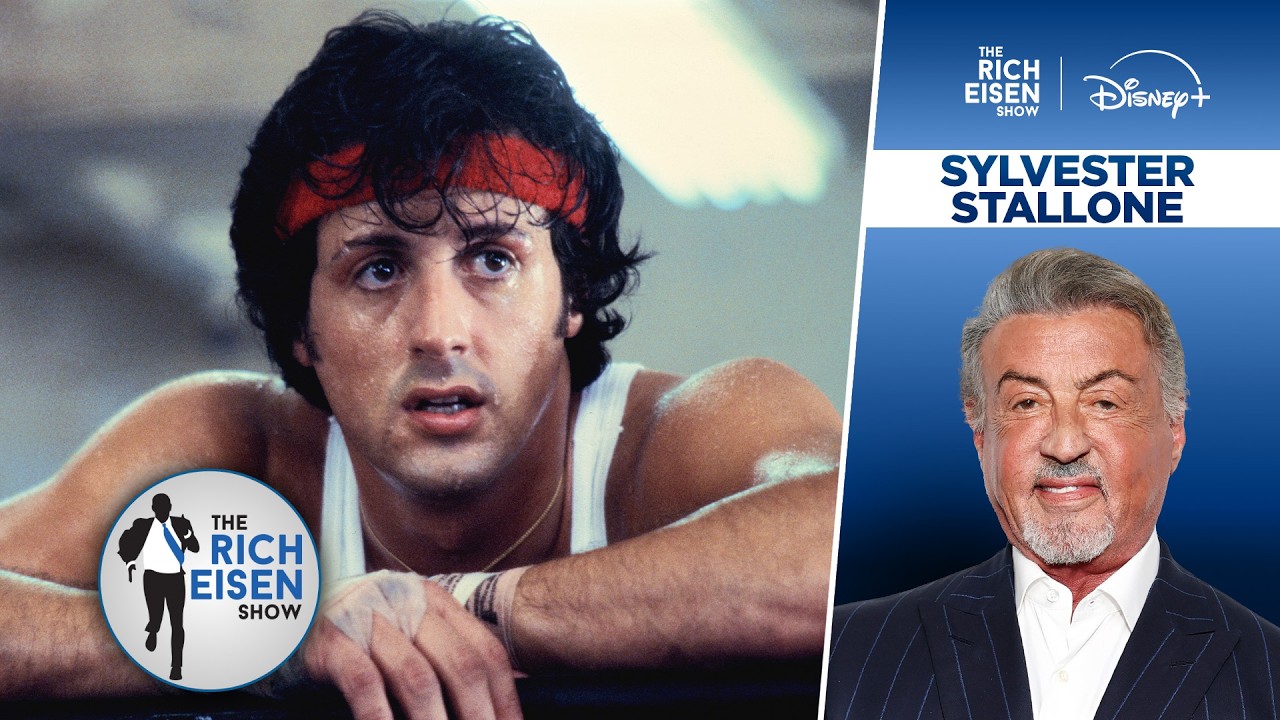
Sylvester Stallone on His New Memoir & Becoming an Unlikely Hollywood Legend
Sylvester Stallone figured his life after Rocky was already an open book. So for his memoir, he wrote about the part nobody saw: the climb.
The book is called The Steps, and as Rich explained on the show, the title is a metaphor for the steps Stallone took from arriving on the scene in 1969 to his big Oscar night with Rocky. "My life pretty much after Rocky has been an open book," Stallone told Rich. "The one thing that most people don't know, and that could be the most instructive, is how it all happened. You know, the trials and tribulations, the ups and downs, and what it took to like overcome some pretty sizable odds."
Stallone was refreshingly blunt about where he started. He never had illusions about becoming a romantic leading man. "I realized I didn't have the attributes for that," he said. "I had too many like idiosyncrasies." Because of the way he spoke and the way he looked, the small jobs he did land were always the same. "It would always be the mugger. I was always mugging Jack Lemmon or Woody Allen," he said. "I was never the good guy. I was always the bad guy."
That realization pushed him toward something he could do cheaply. "You're not going to make it really as a successful actor, so you should pivot," he recalled telling himself. "Okay, maybe learn how to write. And that was the beginning of my life, really."
Rich was struck by the jobs Stallone took to pay the bills while he kept writing, including cleaning lion cages at the Central Park Zoo. "It sounds comical, but it's a brutal and a sad job," Stallone said. The night shift at a deli brought in "gypsy gangs and tough guys and people on drugs, people wanting to rob you," which gave him plenty of color. He has always been drawn to outsiders, he said, going back to his childhood fascination with Bronco Nagurski.
The job that changed everything was ushering at a movie theater. People told him he had hit rock bottom. "See, that's the point, guys," he said. He studied film in college for a couple of years, but "nothing compared to what I learned at the theater. I'm working theater dressed in an usher's outfit. It changed my life."
Rich, who covered an NFL Draft held on the steps of the Philadelphia Museum of Art, recalled fans lining up to take photos with the Rocky statue instead of the draft stage. Then he asked when Stallone first put pen to paper on Rocky Balboa.
By then Stallone had written about 10 screenplays, which he called "pretty mediocre." He described screenwriting as "literary math," the discipline of cutting a 25-word sentence to 10 words that still connect to the next 10. After bombing out in New York and making a couple of dollars on Lords of Flatbush, he bought a car and moved to a rough place in the Valley. He gave up any social life, comparing it to Marvin Hagler training in the mountains instead of Vegas. He was so broke he optioned his screenplay Paradise Alley for 100 bucks.
Contrary to popular belief, Rocky was not based on Chuck Wepner. "I always was fascinated with Rocky Marciano because we're like exactly the same size," Stallone said. But the Wepner fight gave him proof for producers that "a nobody, a bum, could go the distance with the greatest." He wrote the first draft longhand without stopping for 72 hours. Rocky was "not a very savory guy" at first, and was not even a boxer. Adrian, Apollo Creed and Mickey came later.
Then came the hardest decision of his life. The studio's offer climbed to "this absurd amount" while Stallone had a pregnant wife and about $80 left. But the script was "designed for all your assets and cover all your flaws," he said. "It's like made for me." "If I sell this we'll have some money but you'll have a broken husband," he told his wife. "I will never be able to forgive myself for not going the distance, at least trying." He rode it out. "And then good fortune struck."
Asked which Rocky scene he is proudest of, Stallone picked two, starting with the one that was nearly cut. "The most pivotal scene is the one I wrote about in the book that it was canceled," he said. The producers told him they had no time and were "pulling the plug," and they literally did. The lights went out on the set in the Bowery.
"That's the first time I actually lost my composure," Stallone said. He begged the producer for one take. "I've never heard this before where a man knows he's going to get terribly punished. He's going to get beaten. He knows he cannot win. But his interpretation of what victory is is so personal that that in itself is a victory."
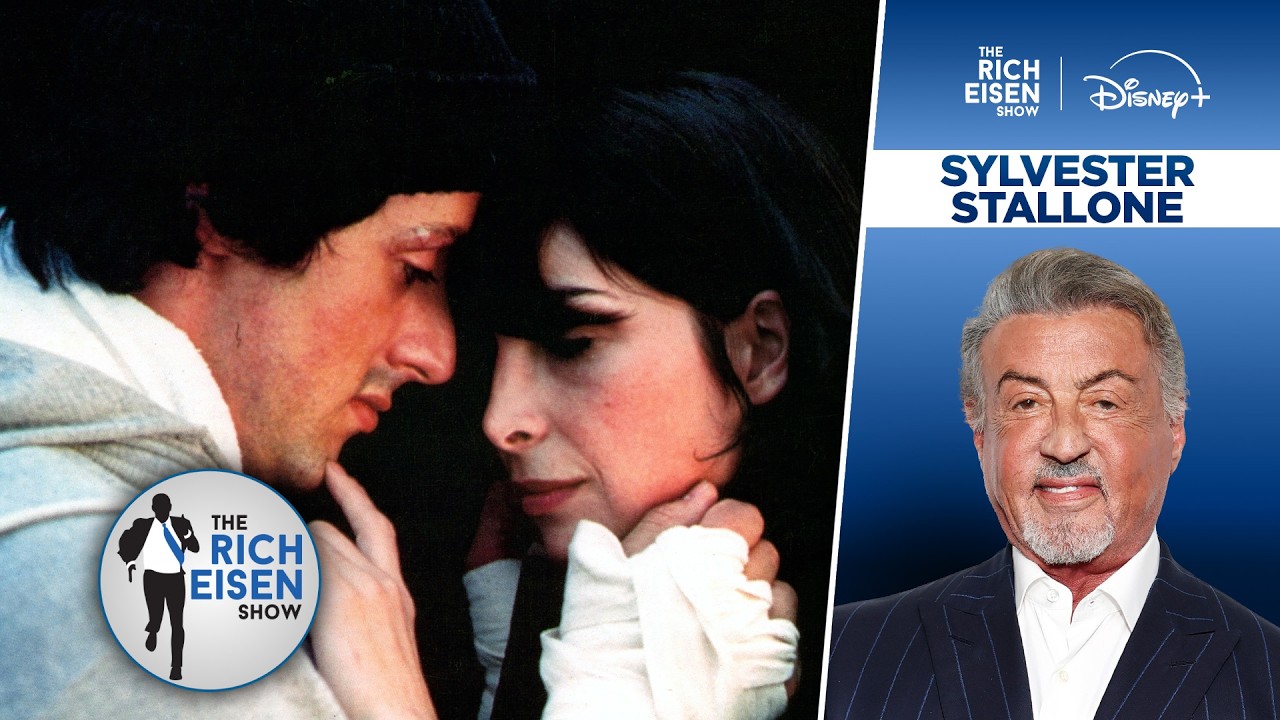
The lights came back on for the scene where Rocky admits to Adrian he cannot win. "It's not about the victory that other people see. We all have our own goal that we consider a world championship," Stallone said. "I'm going to lose, but it's how I lose that's important." The next day the producers came out of the screening room calling it the most important scene in the film. "Yeah, I know. I told you that's the whole plot."
His other favorite is Mickey's visit to Rocky's apartment, which Stallone called "very biographical from my own life." After an exhausting take, the sound man asked if they had been rolling. "You cannot ad-lib an ad-lib," Stallone said. He credited Burgess Meredith's "brilliant energy" and called the scene "an act of forgiveness," almost "like a father and son coming back."
And Mickey's famous lightning and thunder line? "That's me," Stallone said. He reworked old fight euphemisms from the '20s "because that's where Mickey's brain was."
Rich closed with Celebrity True or False, a game Arnold has already survived. First up: did a Rocky sequel boxing scene with Dolph Lundgren send Stallone to the hospital? "Very unfortunately, yeah," he said. Inspired by the Hagler and Hearns fight, he told Lundgren to try to knock him cold for the first 20 seconds. The 6'5", 245-pound former world kickboxing champion blasted him in the chest. That night, Stallone's blood pressure spiked, and he was put on a low altitude flight to St. John's emergency room, ending up in the ICU for about eight days. Doctors said his pericardial sac had swollen, something they usually see in car accidents. "Well, I was hit by a truck, trust me," he joked.
Next, Rich asked if Pelé personally helped choreograph the soccer action in Victory, one of Rich's favorite sports movies. True, and painful. With World War II era steel-tipped shoes and a ball "like a cannonball," Pelé told Stallone to stand in the net. The kick broke Stallone's finger, tore through the dry-rotted net and smashed the windows of the prisoners' bunker. "And this is the guy who is friendly to me."
Did Stallone hate the original three-hour cut of First Blood so much he tried to buy the movie back? "I'm embarrassed to say that's true," he said. Rambo stayed in the woods for over an hour and 15 minutes and talked too much. "The mystique would be he doesn't talk." The studio said no to a buyback, so they edited it down to 91 minutes. "And the rest is history. It worked."
Finally, Rambo was supposed to die. After researching with veterans, Stallone said, "this is not the message I want to send out to all these Vietnam vets." He wrote Rambo's breakdown monologue instead, and the director "flips out," throwing a moose head through a window and smashing guns over chairs. Stallone refused, was sued, and came back five months later to shoot the death scene. Audiences met it "with boos and cheers," and the version without the death is the one in the film.
As Rich noted, Rocky beat All the President's Men, Network, Bound for Glory and Taxi Driver for Best Picture. "That's a hell of an Oscar you have there, sir," Rich said. Stallone's reply: "Thank you, Rocky."
Watch the full interview with Sylvester Stallone on The Rich Eisen Show, streaming live on Disney+ weekdays Noon-3PM ET.
Adapted from the original segment on The Rich Eisen Show. How we cover the show.