SI’s Albert Breer: Ram Had Been Trying to Trade for Myles Garrett Since 2022
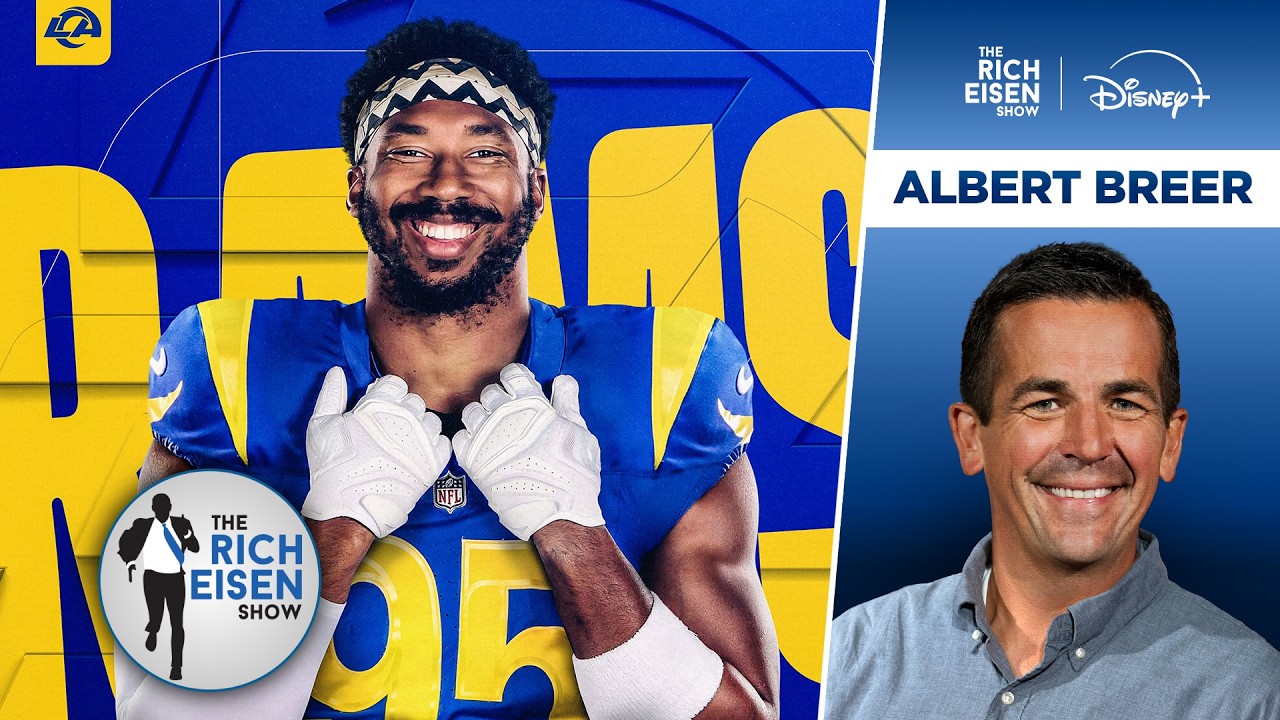
The Myles Garrett trade did not come together this spring. According to Sports Illustrated's Albert Breer, the Los Angeles Rams made their first call about him at the trade deadline in 2022.
"2022. Did you see the right year there?" Rich asked.
"Wow. Yeah," Breer said. "It's wild, right?"
That persistence, Breer told Rich, is a huge part of why the deal finally happened. The Rams kept chipping away, and "this was very real the whole time."
Rich started with the quieter mystery. Garrett had not been around the Browns' OTAs, and a couple of weeks earlier, Todd Monken had been asked about still not having a face-to-face with him. Was this a silent trade demand? Did Cleveland tell him to stay home?
Breer walked through the timeline. Garrett got back from a pre-planned trip to Japan and Korea on May 26. By then, the Browns were ready to tell him what was going on, and "if this train is moving down the tracks, there's no sense in you showing up to this week of OTAs." Garrett flew to Cleveland on Friday and sat down with Andrew Berry and Jimmy Haslam on Saturday. He already knew where things stood, and Breer said that final meeting was "very amicable."
Inside the building, Breer said, the Browns view this as trading a Jim Brown or an Otto Graham. Rich noted he and Breer had been comparing Garrett to Reggie White the day before, and that is exactly what stings for Browns fans.
Rich also floated his own theory on Garrett's sign-off. The minute Garrett heard it was the Rams, Rich joked, he was "pre-approved," like a homebuyer locking in the best rate. Breer's point was more serious. You do not make a move like this without talking to the player, and when it becomes real, you have that conversation.
That mattered to everyone involved, Breer said, including Monken, who people forget was Cleveland's offensive coordinator under Freddie Kitchens in 2019 and coached Garrett then. Berry, Monken and the Haslam family all wanted an all-time great handled the right way, a player they hope retires a Brown, goes into Canton as a Brown, and has his name up in the stadium someday.
Then came the question Browns fans keep asking. Why did this happen?
Rich admitted he thought Cleveland should have done it the first time Garrett asked for a trade, though he understood a public request can kneecap the return. Breer traced the real turn to a pivot 13 months ago, with the trade of the pick that became Travis Hunter. The core Garrett came up with, the group that went to the playoffs in 2020 and 2023, had aged out. The Deshaun Watson trade had taken such a chunk out of Cleveland's ability to build youth that the Browns needed a volume of picks.
Breer thinks the result has been a strong run of drafting. Last year's class included Defensive Rookie of the Year Carson Schwesinger, Mason Graham, tight end Harold Fannin, running backs Dylan Sampson and Quinshon Judkins, and two young quarterbacks. This year, three top-40 picks became tackle Spencer Fano and receivers KC Concepcion and Denzel Boston.
"Well done," Rich said.
That left the Browns with a roster of 22- and 23-year-olds and a hard question. Where will Garrett be, and what will his trade value be, when that group and a young quarterback, whether Shedeur or somebody else, all come of age? The Browns do not believe Garrett is declining. Breer said they think he is Bruce Smith or Reggie White from a longevity standpoint. But it was a lot to weigh.
Their answer was to supercharge the rebuild. Adding Jared Verse, who lines up age-wise with the young core, plus two firsts in 2027, two seconds in 2028 and two thirds in 2029, gives the Browns what Breer counted as 12 top-100 picks over the next three years, before compensatory picks even enter the formula.
Watch the full interview with Albert Breer on The Rich Eisen Show, streaming live on Disney+ weekdays Noon-3PM ET.
Adapted from the original segment on The Rich Eisen Show. How we cover the show.