SI’s Albert Breer Breaks Down How the Myles Garrett Browns/Rams Trade Happened
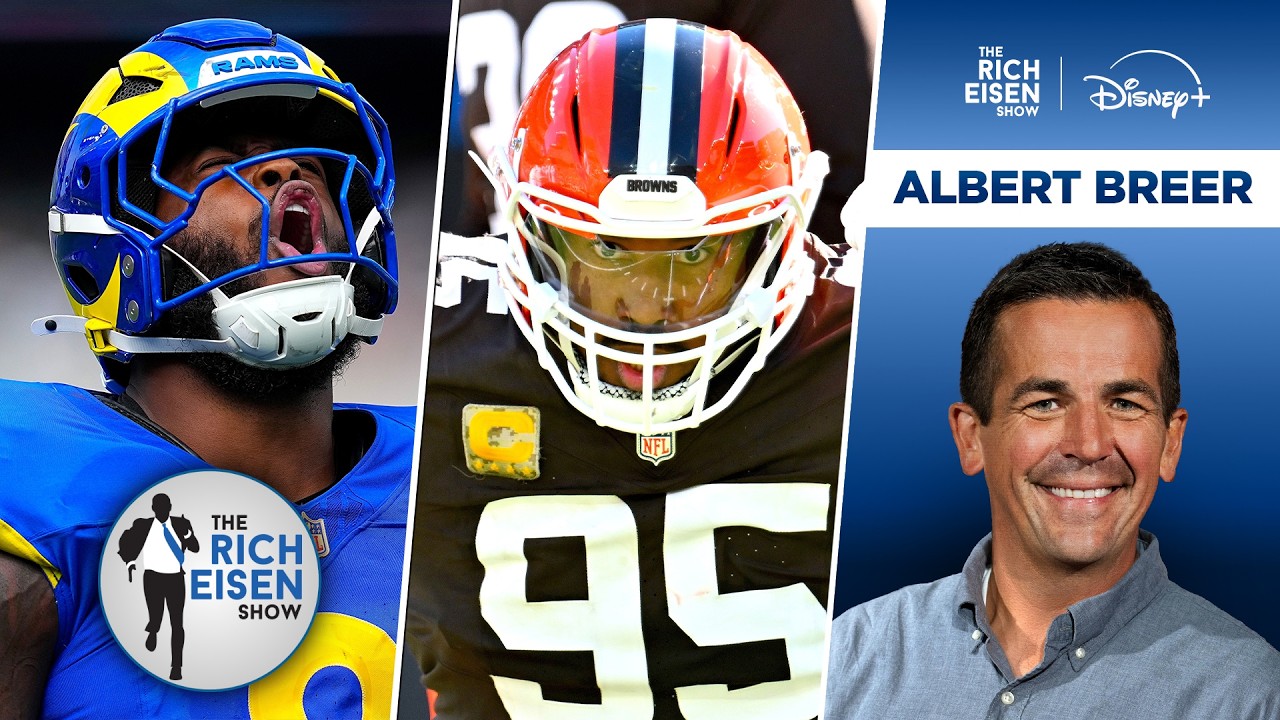
Rich's phone started buzzing the moment the show went live at noon Eastern. The Myles Garrett trade was everywhere. Yet the Rams and Browns did not confirm it until hours later, and Sports Illustrated's Albert Breer explained why the obvious sat unannounced for most of the day.
"It was a little chaotic actually," Breer told Rich.
The two teams had been at it for a while. Breer said the first contact came at the end of March, the Browns knew the Rams were serious before the draft, and things ramped up from there. Over the final 10 days or so, the deal looked increasingly likely. What held up the announcement was a conversation, not a contract.
"The relationship between the Rams and Jared Verse," Breer said. Sean McVay has a strong personal bond with Verse, and Breer noted McVay has been through this before with Jared Goff. "I think we've all heard what Sean's regrets were over his handling of that situation."
So the Rams wanted McVay to sit down with Verse face-to-face and tell him himself. It mattered to the organization and to McVay personally. Breer's understanding was that the plan had been to keep everything under wraps until about 8:00 Eastern.
"Oh, good luck," Rich said.
Sure enough, word got out in the morning and everyone was scrambling. But the reason for the silence, Breer said, was that McVay wanted Verse to hear it from him "before he found out some other way."
Rich has seen that relationship up close. He called Rams games for NFL Network a couple of years ago locally and last year in London, and he recalled a rookie Verse coming out "a million miles a minute" in practice while McVay tried to calm him down without dousing the fire. Still, Rich said, the bottom line was that Myles Garrett was available at age 30 with a couple of years left on his contract. "That's the end of that."
Were other teams in the mix, Rich wondered, or was this a Luka-style pocket listing? Breer said teams check in on these things, but the relationship between the two front offices made the difference. The first answer the Rams got was no. They came back anyway.
What they were willing to offer in a purely draft-pick framework showed Cleveland how serious they were, Breer explained, and that they intended to keep working through it. By the draft, the Rams were "pretty freaking confident" they would find a way. The Browns, at that point, were probably still thinking they were not trading Garrett.
Rich then pointed to what now looks like a big fat breadcrumb. The Browns had proposed a rule change to the league, which was shot down, that would have given teams far more leeway to trade future first-round picks. Was that born out of these talks?
"The timing's interesting for sure," Breer said. But he did not believe the Browns were ever going to move Garrett purely for picks, and he returned to the framework Andrew Berry and his staff used, three principles in all.
First, any deal had to serve Cleveland's short-term and long-term interests. Second, the Browns needed a premium player at a premium position on a cost-controlled contract, meaning a pass rusher, corner or offensive tackle still on a rookie deal. Third, they needed premium draft capital on top of that.
Four or five first-round picks might make for a louder headline, Breer acknowledged. But as the Rams showed how serious they were, Cleveland settled on something more specific.
"We need to get a known commodity in here," Breer said, describing the Browns' thinking. "We want to get somebody who can help us right now. And we need that somebody who can help us right now to also be part of our long-term future, which very clearly Jared Verse will be."
Watch the full interview with Albert Breer on The Rich Eisen Show, streaming live on Disney+ weekdays Noon-3PM ET.
Adapted from the original segment on The Rich Eisen Show. How we cover the show.