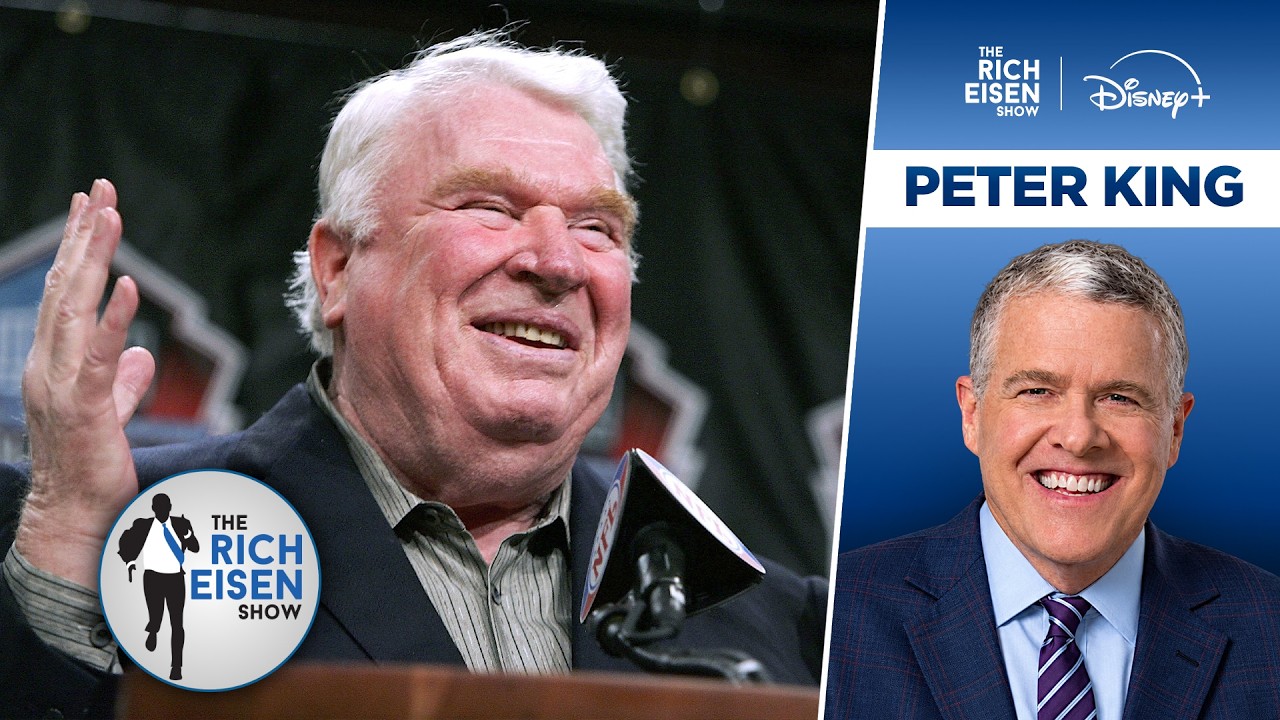
Peter King: What It Was Like to Travel Cross-Country in a Bus with John Madden
Peter King has spent a career chasing white whales. He wanted to spend a week with NFL officials, and he did. He wanted to ride a bus across the country with John Madden, and he did. His new one, he told Rich, was to find out things about the biggest events of the last 40 years that people still don't know.
The result is his new book, The Game, released this week, and the conversation that followed was a tour through the stories that made King fall for it all over again.
Rich opened with a thank you. Back when NFL Network was new, King was one of the first big voices to write that the upstart channel and its draft coverage were worth watching. For the network, Rich said, it felt like they had made it to the back row of the checkerboard.
**How the NFL became a year-round sport**
King said he writes a lot in the book about how the scouting combine helped the league turn the offseason into a series of tentpole events. When he started covering the sport, Pete Rozelle believed absence makes the heart grow fonder: get people away from football and they'll come back desperate for it in mid-August. Paul Tagliabue and Roger Goodell, "not so much."
What King loved about the network's combine coverage was the Saturday when Rich and Mike Mayock would spend 10 minutes on every team in the league, an update on all 32 teams heading into the offseason. That beat debating whether some prospect now looked like a sixth-round pick instead of a seventh. King also recalled Mayock telling him that after his first combine broadcast, his father, a high school football coach, told him, "People are never going to watch that crap. Are you kidding me? It's boring." Rich noted that was Rozelle's initial reaction when ESPN first wanted to televise the draft.
Rich's own lesson from those years was that a couple of fallow Sundays is all the absence anybody needs. And while the action on the combine field is dry, you could turn the coverage into sports talk radio. Hit all 32 fan bases and "you got people hooked."
The research taught King something new, too. In 2009, the NFL began building what it calls the calendar wheel, a circular calendar in which every event feeds the next. The Super Bowl leads into the combine, the combine into free agency, free agency into pro days and the rest of the pre-draft season, the draft into offseason workouts and OTAs. When King pointed out to the league's Peter O'Reilly how jam-packed it already was, O'Reilly pointed to late June and early July and said Goodell is pressing them to find something there.
**The 1988 49ers, and how the sausage was made**
Asked what leaped out at him most, King went to the 1988 49ers, the season everybody remembers for the John Candy Super Bowl, with Joe Montana telling Harris Barton to look at John Candy before throwing the winning touchdown pass to John Taylor. "Great, wonderful, everything," King said. "He didn't see how the sausage was made."
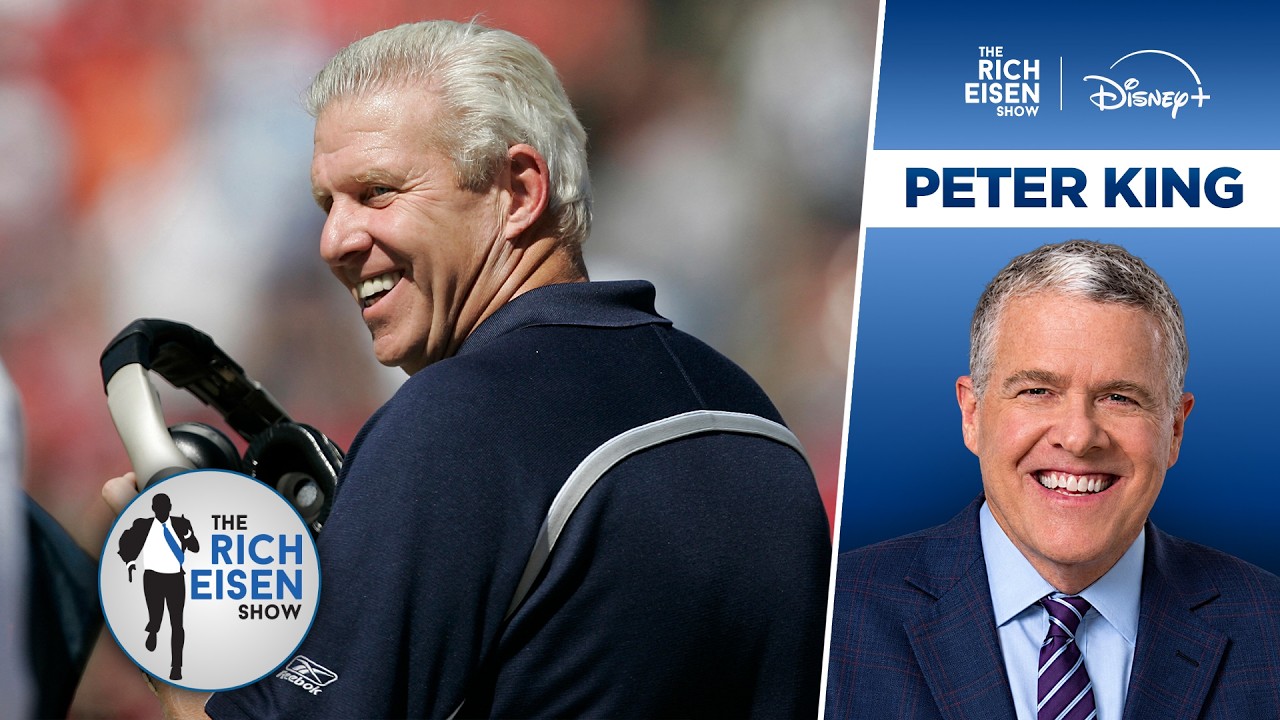
In the middle of that season, Bill Walsh sat at Eddie DeBartolo's kitchen table in Menlo Park, California, crying his eyes out. Twice. The season was falling apart, Montana and Steve Young were both unhappy, and Walsh was jockeying between quarterbacks. In a come-to-Jesus coaches meeting, Walsh went around the room asking what the problem was. Mike Holmgren, then a 40-year-old quarterbacks coach, answered: "Coach, the problem is you. You need to pick a quarterback."
Walsh stormed out. Holmgren, King said, figured he had left his house that morning with his wife Kathy and three daughters expecting him to come home with a job, and now that wasn't happening. Then Walsh came back in. "Mike's right. I do need to pick somebody. And we're picking Joe Montana." That changed everything, and the 49ers went on to win the Super Bowl. King doesn't think even ardent Niners fans knew that story.
The book covers plenty more, King said, from Tagliabue after 9/11 to whether Reggie White really wanted to pick the Packers ("I'm not so sure") to why Nick Foles played the best game of his life against "the great and powerful Oz, Bill Belichick," including two weeks spent finding nine things about the Philly Special you didn't know.
**Across the country with John Madden**
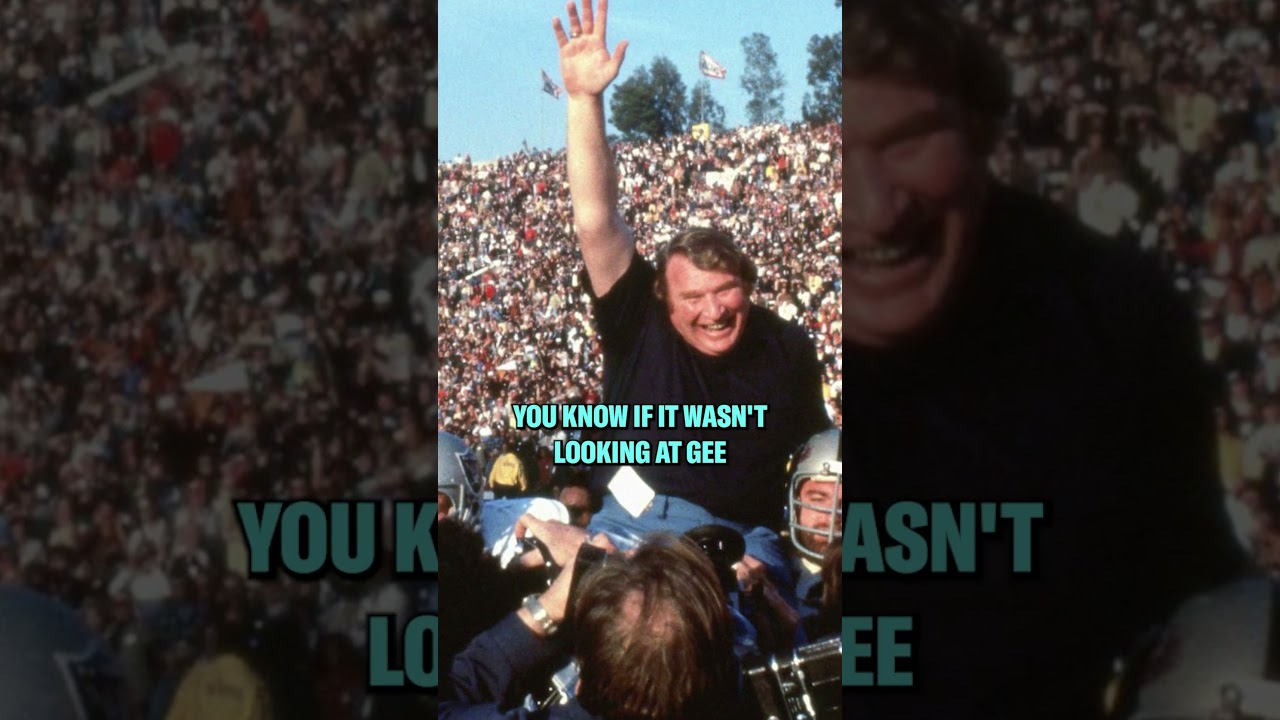
So what was the bus trip with Madden really like? "Madden is really Madden," King said. The only difference was that he was "a little growly," and he had a rule. If you start a bottle of water, you finish it. These were giant 50-ounce bottles.
About an hour into the trip from Pleasanton, California, to the Dakota in Manhattan, where Madden lived next door to Roberta Flack and was good pals with Yoko Ono, King heard a growl: what did I tell you? He had started a bottle and left it behind to go talk to the bus driver. King imagined getting thrown off the bus in Reno and explaining to Sports Illustrated that he blew it by breaking the water rule.
What King remembers most is Madden's curiosity. He wondered what a wildflower was crossing Nebraska on I-80 (spotted knapweed), and how traffic would be getting in and out of New York. "Everything that's said about him that's good, you're right."
Rich added a story from Steve Mariucci, who said Madden basically owned Pleasanton and co-hosted a charity bocce tournament with Mooch every year. Madden was a diehard poker guy, and his poker group threw cards into his casket. He's buried with a deck. Rich noted how the league now makes every Thanksgiving a Madden celebration, and how every broadcaster pulls a little from his style.
**Steve Sabol and the camera that wouldn't go away**
King said there's one other person who was most like Madden of anyone he's known in the last 40 years: Steve Sabol. He hadn't planned a Sabol chapter, but people at NFL Films "probably talked a little bit too much" and told him how Sabol choreographed his own memorial service, down to having his ashes placed at a dwarf elm tree he could see from his window, in the NFL Films parking lot, where people walk by every day.
The story that sealed it came from Sabol's early days. Two years out of college, he took a Bell & Howell camera to Green Bay and shot Vince Lombardi through the Ice Bowl. That New Year's Eve, he went to Lombardi's house as a guest and brought the camera. At one point Lombardi told him it was time to put the camera away, kid. Sabol refused, King said, because nobody would ever be in that position again. King believes Sabol's film is a gigantic reason Lombardi is a legend not only in football but in life.
Rich, who called Sabol a raconteur, an artist and a film buff, said NFL Network doesn't exist without him. Sabol wrote the foreword to Rich's 2007 book within a day of being asked, and Rich had Chris Brockman pull a framed note off the wall: Sabol's congratulations when Rich was first nominated for an Emmy, about two years into NFL Network. It said Rich had not only done well, but made everyone around him better, the mark of a great studio host.
Rich also remembered the day Ed Sabol walked into the network unannounced, alone, on his way to a flight, because he hadn't seen it yet. Rich called Steve Bornstein, who couldn't believe it. "It was as if the founder of football had walked in the door."
King's Mount Rushmore of the 100 most important people in NFL history has Steve Sabol in the top 20, and he has heard the pushback. "If you don't think that Steve Sabol belongs in the top 20 of the most important people ever in significance in the NFL, you just don't know it."
**History matters, and Paul Brown might be the greatest**
That list is part of King's bigger point: we don't respect history enough. George Halas is first. King put Paul Brown third, and while he isn't saying Belichick isn't the greatest coach ever, "I don't think he is. I think Paul Brown is." King wants people to know Otto Graham and Don Hutson, who retired with three times as many catches, receiving yards and touchdowns as anybody in history to that point.
Brown founded the Cleveland team in 1946, won four straight All-America Football Conference titles, and when the Browns joined the NFL, Bert Bell scheduled them in 1950 against the defending champion Eagles in Philadelphia in primetime to teach them a lesson. Cleveland won 35-10. Rich added Brown's other innovations, from the 40-yard dash to taxi squads to hiring an offensive coordinator named Bill Walsh who scripted the first 15 plays. King noted that Bill Belichick's father wrote the first book on football scouting and asked Brown to write the foreword. In King's opinion, Brown is "peerless."
**Bill Parcells' parking space**
Rich asked for King's favorite Bill Parcells story from his four years as a Giants beat writer for Newsday. Starting in 1985, with 19 papers covering the team, King asked his wife Ann if he could live at training camp in Pleasantville, New York, for a month. He was in the coffee room at 7 a.m. every day. Around day three, Parcells did a triple take and asked, "Who the F are you?" King explained he was competitive and wanted to win. Parcells walked out shaking his head.
Later, after the PR staff banned King's post-press-conference sidebars, King asked Parcells how he could still get a question in. "Be in my parking space when I get here in the morning," Parcells said, assuming King would never show at 5:45. King was there at 5:30. Parcells just shook his head as he pulled in.
King said Parcells appreciated people who worked, and knew how to handle a locker room where plenty of players resented that Lawrence Taylor got away with things. His line was that he wasn't interested in being fair, he was interested in being right and in winning. Rich noted that Parcells' fingerprints are all over Seattle's defense-first build and Sean Payton, "a fruit of the Parcells vine." King's book has a chapter on Payton, whose Saturday team meetings include a variety show co-hosted by defensive tackle Malcolm Roach, too ribald to quote. Payton, King said, still talks to Parcells once a week. "That's his sensei."
**Peppermint Life Savers and full-size Milky Ways**
Before leaving, King admitted on national TV to stuffing his pockets with peppermint Life Savers from the green room, "one of the most underrated candies in the history of mankind," and confessed to a childhood scheme of wearing four disguises to hit the same Enfield, Connecticut, house that handed out full-size Milky Way bars. "If it's free, it's me," he said.
Watch the full interview with Peter King on The Rich Eisen Show, streaming live on Disney+ weekdays Noon-3PM ET.
Adapted from the original segment on The Rich Eisen Show. How we cover the show.