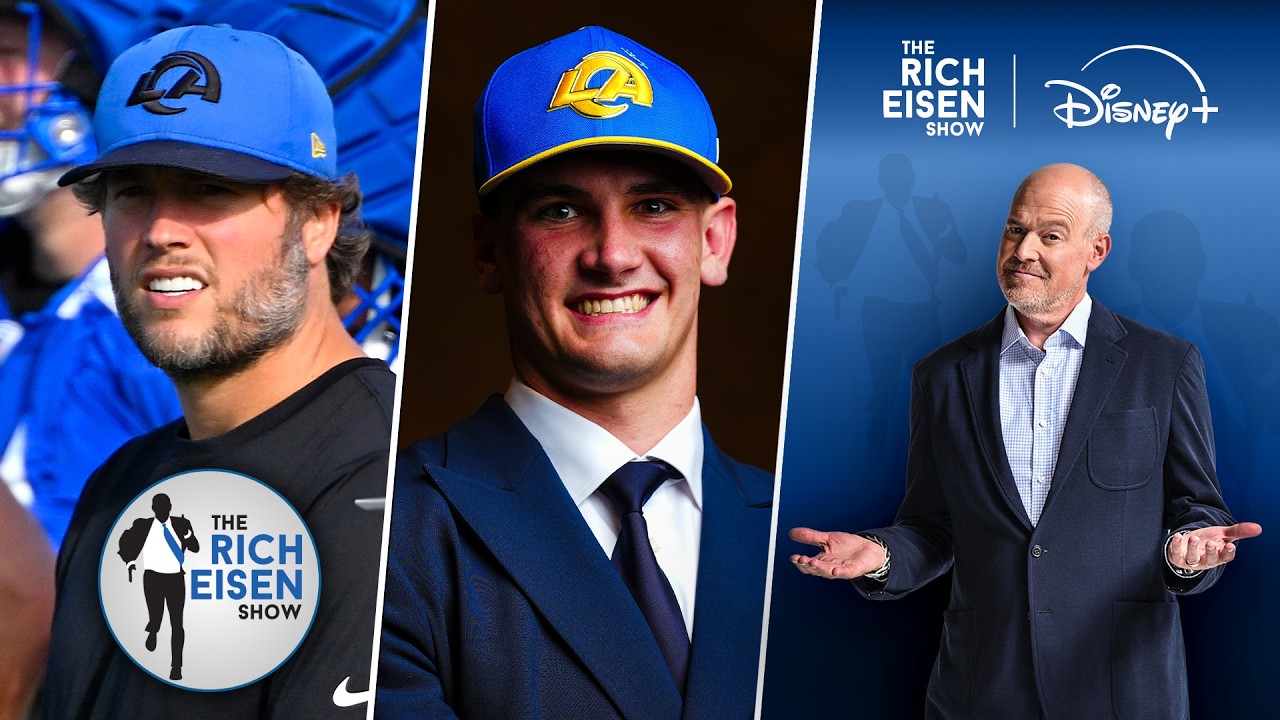
NFL Insider Tom Pelissero: What Stafford’s New Deal Means Beyond 2027 for Rams
Tom Pelissero walked Rich through what the Matthew Stafford extension actually does inside the Rams cap room, and the takeaway was structural rather than financial. This was not, in Pelissero's read, a raise. It was an avoidance of a problem the Rams did not want sitting on their desk next March.
Start with the history. After the Rams won the Super Bowl in February 2022, Los Angeles gave Stafford a four-year extension that ran through 2026. The team has since adjusted the structure twice. In 2024, they gave him a raise. In 2025, they gave him a bigger one. The 2026 year was the final year of the deal.
What just happened, Pelissero said, is the Rams tacked on one additional year.
"This is not a deal that gives Stafford a significant raise in 2026," Pelissero told Rich. "It does add some incentives in both years of the deal tied to performance."
The structural reason this matters is what the alternative looked like. Under Stafford's previously restructured contract, the Rams had pushed substantial bonus proration into future years to free up cap space at various points. That accounting works fine as long as the player remains on the team. The moment the player departs, all of that unamortized proration accelerates onto the cap immediately.
"It would just create a challenging situation and a time crunch where the Rams would need an answer for Matthew Stafford," Pelissero said.
The new extension removes that pressure point. By adding a year to the deal, the Rams give themselves room to extend the actual decision window. Stafford may play in 2027. Stafford may walk. Stafford may retire. Whatever the answer, the team is no longer locked into a March 2027 doomsday clock where his cap implications would force their hand.
Pelissero was clear that this does not lock Stafford into 2027.
"It does not necessarily mean Stafford is playing in 2027 or playing in 2027 for the Rams," he said. "But it does avoid this kind of doomsday scenario."
The political read was Sean McVay's repeated emphasis on Stafford being the team's quarterback. The night the Rams drafted Ty Simpson, McVay was visibly grumpy and said "Stafford's our guy" multiple times to anyone who would listen. The extension confirms the messaging. Stafford is the 2026 starter. Simpson sits.
The remaining question is what 2027 actually pays. Pelissero noted that he has not seen the full contract. His understanding, from sources, is that Stafford makes roughly $40 million in 2026, the same number he was already due. Incentives can push that higher based on performance. The 2027 year has additional triggers that may include the March roster bonuses the Rams have used in past Stafford restructurings.
The summary line Pelissero left the room with was the one the Rams probably want fans to take away.
"All options still on the table for 2027," he said. "This just is beneficial for everybody involved based upon the multitude of ways this can go with the players pushing for it."
In other words, the Rams now control the timing of every Stafford decision instead of letting the calendar control them. That is the win they were after.
Watch the full interview with Matthew Stafford, Tom Pelissero, Sean McVay, Ty Simpson on The Rich Eisen Show, streaming live on Disney+ weekdays Noon-3PM ET.
Adapted from the original segment on The Rich Eisen Show. How we cover the show.