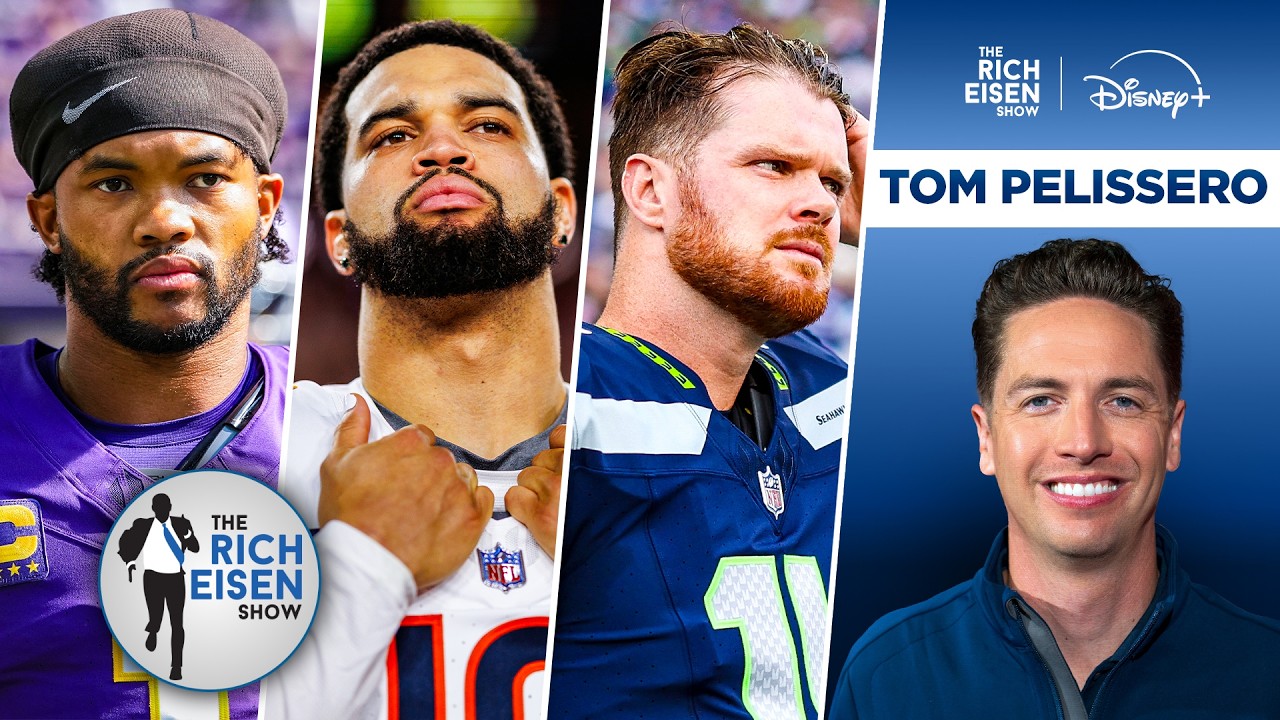
NFL Insider Tom Pelissero Talks Brendan Sorsby to NFL & More with Rich
Tom Pelissero wanted to qualify everything up front: Brendan Sorsby is not a victim. He made the bets, some against the rules, got himself into trouble, went to rehab, and came back. But what played out over the last two weeks, Pelissero argued, has very little to do with Sorsby himself. It's something much bigger.
His metaphor was an earthquake. The ground is shaking under college football, and everyone's first instinct when the ground shakes is to grab onto something. That's what teams, conferences, and the NCAA have been doing for years now, with seemingly no rules and everything decided in the courts. Sorsby used that court system to his advantage, paying for Jeffrey Kessler and top representation to win an injunction overruling the NCAA. Pelissero noted similar fights from Trinidad Chambliss to Diego Pavia, but once a case enters the courts, everyone loses control of both the outcome and the timeline. With the Big 12 threatening, attorneys general making noise, and the NFL supplemental-draft deadline looming, the fight could have dragged into the season. So the plan became to withdraw the lawsuit, let the ineligibility ruling stand, and apply to the supplemental draft.
On the NFL side, Pelissero leaned strongly against a suspension. There hasn't been a supplemental draft since 2019, because players don't lose eligibility anymore in the NIL era. The Terrelle Pryor precedent, where the NFL enforced an NCAA suspension and even kept Jim Tressel from the Colts, belongs to a different world, one where a coach lost his job over players getting free tattoos. The modern comparison is Jim Harbaugh, whose show-cause penalties effectively ban him from college football through 2038 while he coaches the Chargers. If the NFL won't enforce that, Pelissero said, it's hard to justify enforcing anything on Sorsby. The collective bargaining agreement also bars suspensions for conduct before a player entered the league, and most of Sorsby's bets wouldn't violate NFL gambling rules anyway.
Pelissero put the money in perspective: roughly $90,000 over four years, which he said amounts to a bad weekend in Vegas for some people, against the millions Sorsby has already lost in legal fees and endorsements. He floated a possible settlement, the kind the NFL prefers, where Sorsby could practice but not play as a rookie, recalling the negotiated Deshaun Watson suspension and the Ezekiel Elliott case he covered across three federal courts in 2017. The NCAA keeps losing in court because, unlike the NFL, it has no history of settling. Above all, Pelissero stressed that this is a mental health issue at its core, not a courts issue, and that Sorsby, a human being who wants to move on, will still have to answer the hardest question from teams: did you ever influence, or were you ever tempted to influence, a game?
As for who takes him, Pelissero set the over/under at the second-to-third-round border, hard to imagine a player this talented sliding further. History downgrades supplemental-draft prospects, from Bernie Kosar to Josh Gordon to the last one taken, safety Jalen Thompson. The Browns have two firsts but Todd Monken's feelings are known, while teams like the Cardinals and Vikings have their own quarterback situations. There's no date yet, with the draft likely mid-to-late July and conducted, as always, by email through some lone scout at a computer. A process irrelevant for 15 years now has a potential first-round quarterback running through it.
Pelissero closed on George Pickens, whose agents at Athletes First, he said, don't believe in leaving checks uncollected, which is why Pickens showed up for mandatory minicamp after signing his tender. Jerry Jones has said no contract is forthcoming, and barring a trade, Pelissero expects Pickens to suit up for the Cowboys in week one.
Watch the full interview with Tom Pelissero on The Rich Eisen Show, streaming live on Disney+ weekdays Noon-3PM ET.
Adapted from the original segment on The Rich Eisen Show. How we cover the show.